Hinges: Function, Types, and Applications
Publish Date: 26 Sep 2025
Hinges are essential mechanical components that create a pivot point between two connected parts, allowing controlled opening, closing, and positioning. Whether used for access panels, machine covers, doors, or enclosures, the right hinge contributes to smooth movement, structural stability, and long-term reliability. Choosing suitable hinges is not simply about matching dimensions—it also involves evaluating load capacity, material, mounting method, and maintenance requirements.
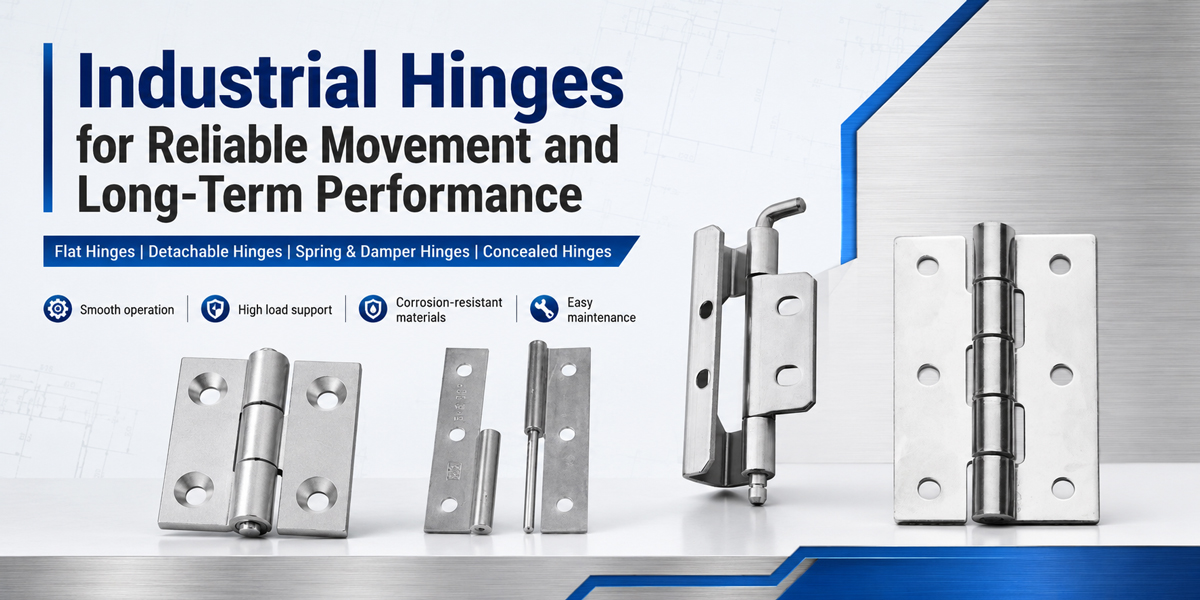
MISUMI India offers a comprehensive range of industrial hinges designed for different installation and performance requirements. The product lineup includes Flat Hinges, Detachable Hinges, Spring & Damper Hinges, and Concealed Hinges, enabling engineers and buyers to select products that match their mechanical design and operating conditions.
Why Selecting the Right Hinge Matters
A hinge performs more than the simple task of connecting two moving parts. It directly affects alignment, opening performance, operational safety, and maintenance frequency. Selecting an unsuitable hinge can lead to excessive wear, uneven loading, misalignment, or premature replacement.
When comparing heavy duty hinges, stainless steel hinges, or other hinge types, buyers should consider how the hinge will perform throughout its service life rather than focusing only on initial cost. Factors such as corrosion resistance, installation space, allowable load, and mounting configuration all contribute to reliable long-term performance.
Evaluating these considerations before purchasing helps reduce maintenance costs and minimizes unexpected downtime caused by hinge failure or incorrect installation.

Types of Hinges Available at MISUMI India
MISUMI India offers several hinge categories to accommodate different mounting methods and functional requirements. Understanding the characteristics of each type simplifies product selection.
Flat Hinges
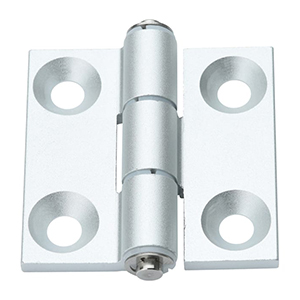
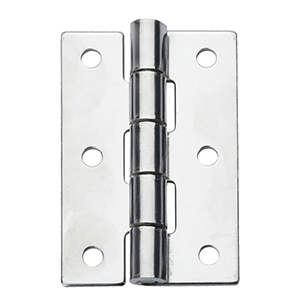
Flat hinges are among the most widely used hinge types for doors, panels, and covers requiring stable movement and reliable load support. MISUMI offers flat hinges in multiple designs and materials, including stainless steel, steel, aluminum, resin, and zinc alloy variants. Depending on the model, buyers can also choose from countersunk-hole, slotted-hole, welded, and heavy-load configurations to suit different installation requirements.
Heavy-load flat hinges are designed to provide excellent structural support for larger panels and doors. According to the MISUMI product specifications, selected models provide an allowable load of up to 1000 N when two hinges are used, making them suitable for installations requiring higher load capacity while maintaining smooth operation.
Detachable Hinges
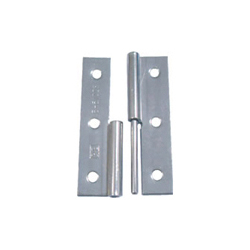
Detachable hinges are designed for installations where doors or covers need to be removed regularly without dismantling the complete hinge assembly. Instead of removing mounting hardware each time maintenance is required, detachable hinges allow quicker removal and reinstallation of doors, helping reduce servicing time.
This hinge type also simplifies inspection and cleaning because access panels can be separated easily when necessary. Buyers should verify the hinge orientation and removal direction before selecting a detachable hinge to ensure compatibility with the intended installation.
Spring & Damper Hinges
Spring and damper hinges provide controlled movement during opening or closing. Depending on the hinge design, they can assist with automatic closing or help reduce sudden movement by providing smoother operation.
These hinges can improve usability by minimizing impact during repeated opening and closing cycles while helping maintain consistent movement. Selecting the correct spring or damping mechanism depends on door weight, movement characteristics, and the required operating feel.
Concealed Hinges
Concealed hinges are designed so that most of the hinge mechanism remains hidden after installation. This creates a cleaner finished appearance while protecting the hinge components from accidental contact during normal operation.
Besides improving appearance, concealed hinges can also help simplify enclosure design by reducing visible hardware on external surfaces. Buyers should confirm door thickness, mounting dimensions, and opening angle requirements before selecting concealed hinge models.
Choosing the Right Hinge Material
Material selection is one of the most important considerations when purchasing door hinges, heavy load hinges, or industrial hinges. The material affects corrosion resistance, mechanical strength, maintenance requirements, and overall service life.
Stainless steel hinges are widely selected because they provide excellent corrosion resistance and long-term durability. They are suitable where exposure to moisture or frequent cleaning is expected, while also maintaining an attractive surface finish over time.
Steel hinges provide excellent mechanical strength and are commonly selected where high rigidity and load-bearing performance are priorities. Many steel hinge models incorporate protective surface treatments to improve durability and extend service life.
Zinc alloy hinges provide a practical balance between strength, weight, and appearance, making them suitable for many general-purpose mounting applications where moderate load capacity is sufficient.
Selecting the appropriate hinge material early in the design process helps improve long-term reliability while reducing future maintenance and replacement costs.
Heavy Duty Hinges vs. Standard Hinges
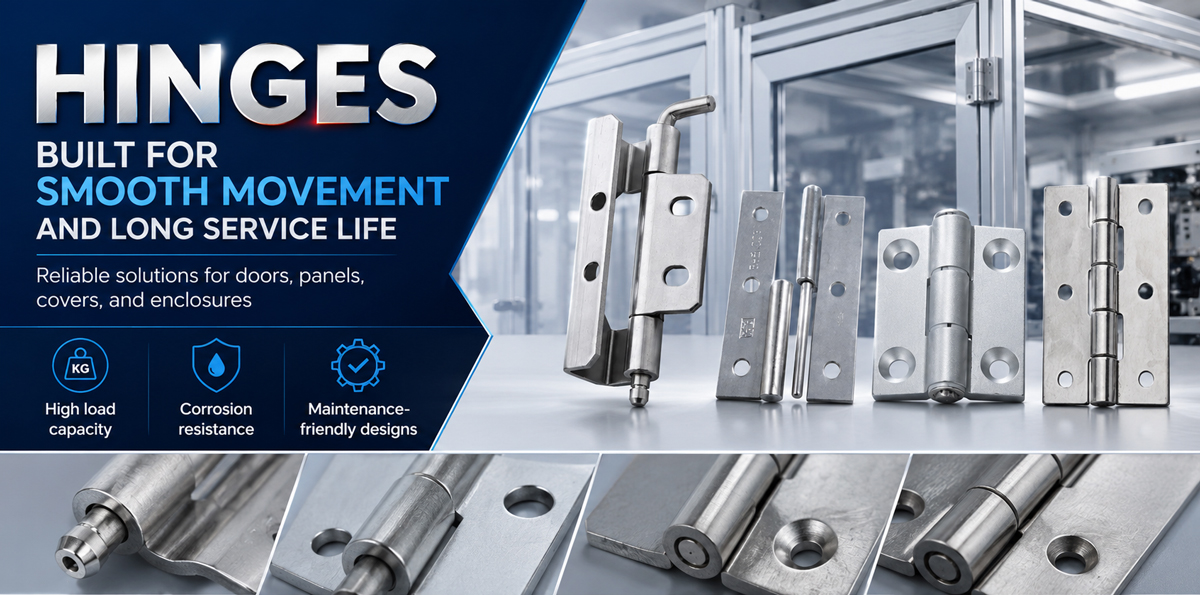
Selecting between heavy duty hinges and standard hinges depends on more than the overall size of the door or panel. The expected load, operating frequency, mounting arrangement, and service conditions should all be considered before making a selection.
Heavy duty hinges are designed to support higher loads while maintaining consistent movement and structural stability. Compared with standard hinge designs, they generally offer greater load-bearing capability and are better suited for larger or heavier doors and access panels.
For example, MISUMI's heavy load flat hinges include models with an allowable load of up to 1000 N when two hinges are used, providing dependable support when installed according to the product specifications.
Standard hinges remain suitable where load requirements are lower and a compact, economical solution is sufficient. Comparing the allowable load, mounting style, material, and overall dimensions before purchasing helps ensure the selected hinge matches the intended installation.
Key Factors to Consider When Selecting Hinges
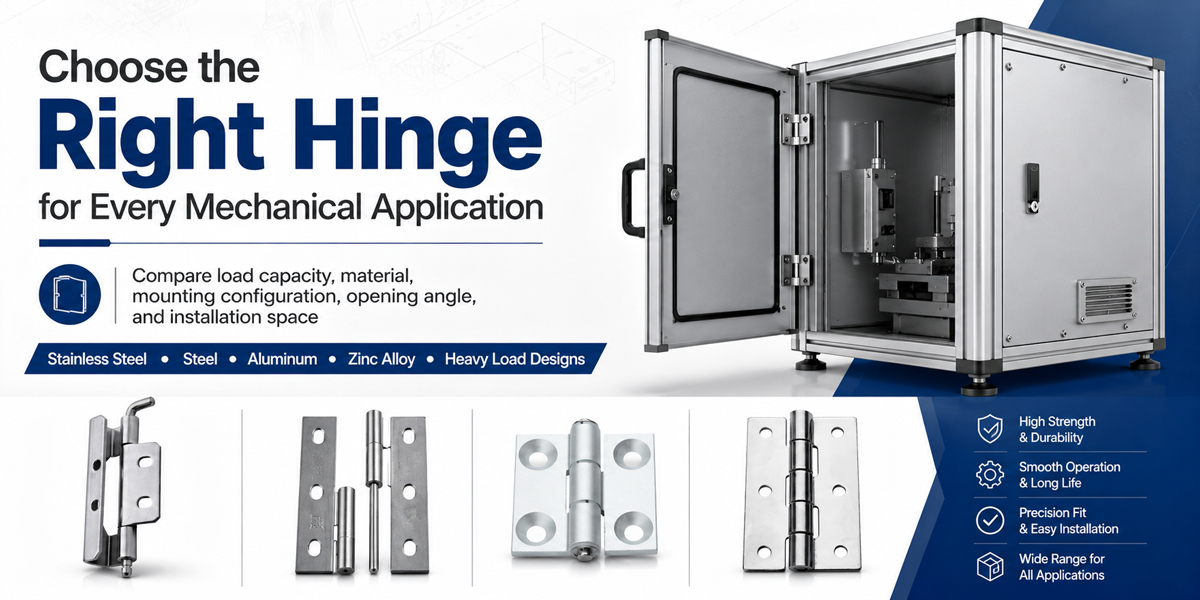
Choosing the correct hinge involves evaluating several technical and installation factors rather than focusing on appearance or dimensions alone.
Load Capacity
The hinge should safely support the weight of the moving component throughout its operating life. Always compare the allowable load specified for the hinge with the expected door or panel weight.
Material Selection
Choose a material that matches the installation environment and maintenance expectations. Stainless steel offers excellent corrosion resistance, while steel provides high mechanical strength. Zinc alloy may be appropriate for lighter-duty installations.
Mounting Configuration
Different hinge models are available with various mounting hole patterns, including countersunk and slotted-hole designs. Selecting a compatible mounting configuration helps simplify installation and maintain proper alignment.
Opening Angle
Verify that the hinge provides the required opening movement without interfering with surrounding components. The opening angle should be suitable for maintenance access and normal operation.
Maintenance Requirements
Consider how frequently the assembly will require inspection or servicing. If doors or covers need to be removed regularly, detachable hinges may offer a more practical solution.
Evaluating these factors before purchasing helps reduce installation challenges and improves long-term operating reliability.
Installation Considerations for Reliable Performance
Correct installation is just as important as selecting the right hinge.
Heavy-load flat hinges should be installed according to the manufacturer's recommendations to achieve the specified allowable load. Proper alignment of the hinge center axis helps distribute loads evenly and promotes smooth movement.
Adding additional hinges does not necessarily increase load capacity. Incorrect hinge spacing or poor alignment can introduce uneven loading, increase operating resistance, and reduce service life.
Before installation, verify:
- Mounting hole compatibility
- Door or panel dimensions
- Fastener selection
- Hinge orientation
- Required clearance for full opening
Careful installation helps maximize hinge performance while reducing premature wear.
Maintenance Tips to Extend Hinge Service Life
Routine inspection helps maintain reliable hinge operation and reduces the likelihood of unexpected maintenance.
Recommended maintenance practices include:
- Periodically inspect mounting hardware for tightness.
- Check hinges for signs of excessive wear or damage.
- Keep hinge surfaces free from debris that could interfere with movement.
- Replace damaged hinges promptly rather than continuing operation with worn components.
- Follow the maintenance guidance provided for the selected hinge model.
Preventive maintenance helps preserve smooth operation and extends the service life of both the hinge and the connected assembly.
Common Purchasing Mistakes to Avoid
Many hinge selection problems arise because important technical considerations are overlooked during purchasing.
Common mistakes include:
- Selecting hinges based only on overall dimensions.
- Ignoring the allowable load specified by the manufacturer.
- Choosing a material without considering corrosion resistance requirements.
- Selecting an incompatible mounting hole pattern.
- Assuming all heavy duty hinges offer the same performance.
- Overlooking door thickness or available installation space.
- Assuming additional hinges automatically increase allowable load.
- Failing to review product specifications before ordering.
Reviewing technical specifications and comparing available options before purchase helps avoid unnecessary replacement costs and installation delays.

Why Choose MISUMI India Hinges?
MISUMI India offers a broad portfolio of industrial hinges designed to support a wide variety of mechanical design requirements. Buyers can choose from Flat Hinges, Detachable Hinges, Spring & Damper Hinges, and Concealed Hinges in multiple materials, sizes, and mounting configurations.
Each product page includes detailed technical information, allowing users to compare specifications, evaluate available configurations, and select the most appropriate hinge for their design requirements. This simplifies product selection while helping reduce procurement time and improving purchasing confidence.
Whether you are looking for stainless steel hinges, heavy load hinges, flat hinges, or other specialized hinge types, MISUMI provides a comprehensive product range backed by detailed product information and convenient online selection tools.
Conclusion
Selecting the right hinge is an important design decision that affects durability, alignment, maintenance, and long-term operating performance. Beyond choosing the correct dimensions, buyers should evaluate hinge type, material, allowable load, mounting configuration, and maintenance requirements to ensure reliable operation throughout the product's service life.
MISUMI India's hinge portfolio includes Flat Hinges, Detachable Hinges, Spring & Damper Hinges, and Concealed Hinges, offering solutions for a wide range of mechanical design requirements. By reviewing product specifications carefully and comparing available configurations before purchasing, buyers can select hinges that provide dependable performance, easier maintenance, and long-term value.
Explore the complete hinge range at MISUMI India to compare specifications, materials, and mounting options, helping you identify the most suitable solution for your next mechanical design or equipment upgrade.
Frequently Asked Questions (FAQs)
1. How do I choose the right hinge for my application?
Start by evaluating the required load capacity, hinge type, material, mounting method, opening angle, and available installation space. Comparing these factors with the product specifications helps ensure reliable performance and long service life. MISUMI India offers Flat Hinges, Detachable Hinges, Spring & Damper Hinges, and Concealed Hinges to suit different design requirements.
2. What is the difference between flat hinges and detachable hinges?
Flat Hinges provide permanent pivoting support for doors, panels, and covers, while Detachable Hinges allow doors or panels to be removed easily without dismantling the entire hinge assembly. Detachable Hinges are a practical choice when regular maintenance or cleaning requires quick access.
3. Why are stainless steel hinges preferred over steel hinges?
Stainless steel hinges provide excellent corrosion resistance and long-term durability, making them suitable where exposure to moisture or frequent cleaning is expected. Steel hinges offer high mechanical strength and are often selected where maximum structural rigidity is the primary requirement. The appropriate material depends on the installation environment and maintenance expectations.
4. What should I check before purchasing heavy duty hinges?
Before selecting heavy duty hinges, compare the allowable load, hinge material, mounting hole configuration, opening angle, installation space, and overall dimensions. Reviewing the product specifications before ordering helps ensure compatibility with your design and reduces installation issues.
5. Does adding more hinges increase the allowable load?
Not necessarily. Simply adding additional hinges does not automatically increase the allowable load. Proper hinge selection, correct positioning, accurate center-axis alignment, and installation according to the manufacturer's recommendations are equally important for achieving reliable performance.