(!)NOTE : Windows 7 users won’t be able to use some latest features of eCatalog/WOS since Microsoft is ending support for Windows 7 on 14 Jan, 2020. Please upgrade your system for uninterrupted services.

- Notice of End of Sales for Economy Series Pneumatic Equipment Category. More information.
Locating Pins(Page2)
Locating pins, essential in many industries, including the design and assembly of fixtures, play an invaluable role in achieving the precise alignment and positioning of workpieces. These locating pins come in several types, including dowel locating pins and conical locating pins.Dowel locating pins are characteri
Locating pins, essential in many industries, including the design and assembly of fixtures, play an invaluable role in achieving the precise alignment and positioning of workpieces. These locating pins come in several types, including dowel locating pins and conical locating pins.Dowel locating pins are characterized by their cylindrical shape. They are frequently utilized in fixtures to ensure pinpoint accuracy in alignment. On the other hand, the conical locating pins sport a tapered design that paves the way for self-centering and enhanced stability, making them a popular choice among professionals.When selecting locating pins for fixtures, it's crucial to take into account various factors. These include size, the material they're made from, and the specific tolerance requirements of your project. Additionally, locating pin design calculations are often performed to confirm that the pins can endure anticipated loads while maintaining their essential alignment.Alongside locating pins, bushings are commonly used in fixtures. These components provide extra support and significantly reduce friction between the components that mate. In many scenarios, the combination of locating pins and bushings is a winning strategy. This dynamic duo ensures precise positioning, improves assembly efficiency, and boosts the overall quality of the final product across a wide range of manufacturing applications.Whether you're a seasoned professional or just getting started in the industry, understanding the function of locating pins and bushings can greatly enhance the precision and efficiency of your assembly processes.
|
Basic Shape
|
|
|---|---|
Brand |
|
| CAD |
|
| Days to Ship |
|
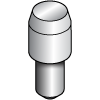
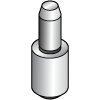

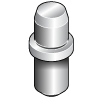
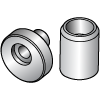

185 items
- Sort By
-
Economy series
You can add up to 6 items per a category to the compare list.
 MiSUMi Economy
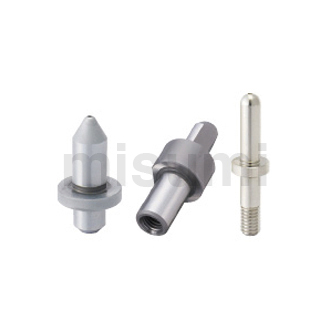
Locating Pins Shouldered, Configurable, Tip Shape Selectable
MiSUMi EconomyMISUMI
New at MISUMI? Get 20% Discount on your First Purchase. Click to Register Now
Basic Shape Environmentally friendly Characteristics/Applications Insertion Guide Tip Shape Insertion Guide Tip Type Insertion Guide Specifications Mounting Side Shape Surface Treatment Heat Treatment Material Insertion Guide Outer Dia. D1(mm) Insertion Guide Tolerance Mounting Side Outer Dia. d(mm) Mounting Side Tolerance Cleaning Method Shouldered - - Round / Diamond Tapered / Taper R / R Not Provided Straight (Press-Fit) / Tapped / Threaded Not Provided / Black Oxide / Hard Chrome Plating Not Provided / Directly Quenching - 2.5 ~ 22 0/-0.02 2 ~ 20 g6 ~ m6 - Days to Ship: 6 Day(s)  6 Day(s)
-
You can add up to 6 items per a category to the compare list.
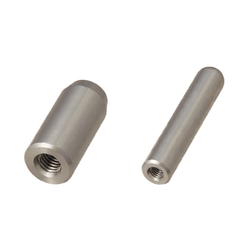
Locating Pins - High Hardness Stainless Steel, Straight (Tapped)
MISUMI
- Locating Pins - High Hardness Stainless Steel, straight (Tapped) from MISUMI.
- The sphere head can prevent the mating side from being scratched. Selectable tolerance with each dimension configurable.
- The tightening torque (ref. value) for hardened products is strength class 10.9. Not applicable when using locking materials or lock washers.
- For tapped type, unless described otherwise on the drawing, the spec. design is the same as for Press Fit Type. For D Tolerance g6, h7, no Insertion guide is provided. (ℓ1)Basic Shape Environmentally friendly Characteristics/Applications Insertion Guide Tip Shape Insertion Guide Tip Type Insertion Guide Specifications Mounting Side Shape Surface Treatment Heat Treatment Material Insertion Guide Outer Dia. D1(mm) Insertion Guide Tolerance Mounting Side Outer Dia. d(mm) Mounting Side Tolerance Cleaning Method Straight / Air Vent - - Round Tapered / Spherical Not Provided Tapped Not Provided Not Provided Stainless Steel - g6 ~ h7 6 ~ 10 g6 ~ h7 - Days to Ship: 8 Day(s) or more
8 Day(s) or more
-
You can add up to 6 items per a category to the compare list.
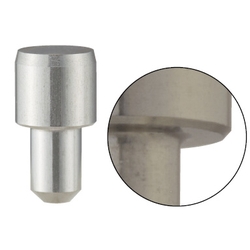
Locating Pins - High Hardness Stainless Steel Large Head, Tapered (Press Fit)
MISUMI
- Locating Pins - High Hardness Stainless Steel Large Head, Tapered (Press Fit) from MISUMI.
- Large Head Tapered with each dimension configurable. We reduced the price drastically compared to the conventional products.
- The material of this locating pin is made of High hardness stainless steel with a hardness level at 35HRC~.
- If the diameter exceeds Ø10, core hardness may be 30HRC~.
- For high hardness stainless steel large head tapered type, the configurable range of dimensions has been further widened and the number of available alterations has been increased.Basic Shape Environmentally friendly Characteristics/Applications Insertion Guide Tip Shape Insertion Guide Tip Type Insertion Guide Specifications Mounting Side Shape Surface Treatment Heat Treatment Material Insertion Guide Outer Dia. D1(mm) Insertion Guide Tolerance Mounting Side Outer Dia. d(mm) Mounting Side Tolerance Cleaning Method Large Head - - Round / Diamond Tapered Not Provided Straight (Press-Fit) Not Provided Not Provided Stainless Steel 2.5 ~ 18 0/-0.01 2 ~ 12 g6 ~ h7 - Days to Ship: 8 Day(s) or more
8 Day(s) or more
-
You can add up to 6 items per a category to the compare list.
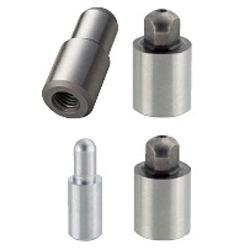
Locating Pins - Sphere Small Head (Tapped)
MISUMI
- Locating Pins - Sphere Small Head (Tapped) from MISUMI.
- Sphere Small Head with the shape designed to be mounted from back using bolts. Improved maintainability compared to Press Fit Type.
- The material of locating pin can be selected 3 types, steel SKS3 Equivalent, stainless steel SUS304, SUS440C or 13Cr stainless.
- Polished, centering hole is sometimes not available for SUS304.
- SUS440C or 13Cr stainless has an identification groove at any position on D part.
- The spherical head may be polished.- Volume Discount
Basic Shape Environmentally friendly Characteristics/Applications Insertion Guide Tip Shape Insertion Guide Tip Type Insertion Guide Specifications Mounting Side Shape Surface Treatment Heat Treatment Material Insertion Guide Outer Dia. D1(mm) Insertion Guide Tolerance Mounting Side Outer Dia. d(mm) Mounting Side Tolerance Cleaning Method Small Head - - Round / Diamond Spherical Not Provided Tapped Not Provided / Hard Chrome Plating Not Provided / Directly Quenching Steel / Stainless Steel 3 ~ 20 0/-0.01 5 ~ 20T g6 - Days to Ship: 6 Day(s) or more
6 Day(s) or more
-
You can add up to 6 items per a category to the compare list.
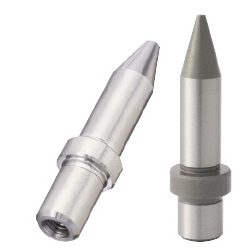
Feed Pins - Shouldered - Tapped
MISUMI
Locating Pins with the tapered part configurable to be longer. The Shoulder supports the workpiece so that it will not damage the base.
Basic Shape Environmentally friendly Characteristics/Applications Insertion Guide Tip Shape Insertion Guide Tip Type Insertion Guide Specifications Mounting Side Shape Surface Treatment Heat Treatment Material Insertion Guide Outer Dia. D1(mm) Insertion Guide Tolerance Mounting Side Outer Dia. d(mm) Mounting Side Tolerance Cleaning Method Shouldered - - Round Tapered Not Provided Tapped Not Provided / Hard Chrome Plating Not Provided / Directly Quenching Steel / Stainless Steel 4 ~ 11 0/-0.01 6 ~ 10 g6 - Days to Ship: 7 Day(s) or more
7 Day(s) or more
-
You can add up to 6 items per a category to the compare list.
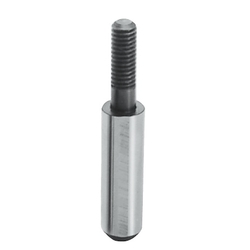
Locating Pins - Air Vent (Threaded)
MISUMI
[Features]Since there is an air groove, it is easy to insert a pin. It is attached with a male thread.
- Volume Discount
Basic Shape Environmentally friendly Characteristics/Applications Insertion Guide Tip Shape Insertion Guide Tip Type Insertion Guide Specifications Mounting Side Shape Surface Treatment Heat Treatment Material Insertion Guide Outer Dia. D1(mm) Insertion Guide Tolerance Mounting Side Outer Dia. d(mm) Mounting Side Tolerance Cleaning Method Straight / Air Vent - - Round Tapered Not Provided Threaded Not Provided Not Provided / Directly Quenching Steel / Stainless Steel 5 ~ 12 g6 3 ~ 6 g6 - From: ₹ 244.82 Days to Ship: 6 Day(s) or more
6 Day(s) or more
-
Economy series
You can add up to 6 items per a category to the compare list.
 MiSUMi Economy
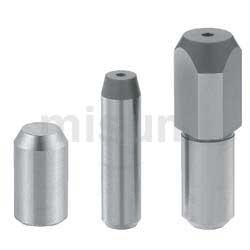
Locating Pins Large Head, Tapered, Configurable - Taper Angle, Tolerance Selectable, Press Fit
MiSUMi EconomyMISUMI
New at MISUMI? Get 20% Discount on your First Purchase. Click to Register Now
Basic Shape Environmentally friendly Characteristics/Applications Insertion Guide Tip Shape Insertion Guide Tip Type Insertion Guide Specifications Mounting Side Shape Surface Treatment Heat Treatment Material Insertion Guide Outer Dia. D1(mm) Insertion Guide Tolerance Mounting Side Outer Dia. d(mm) Mounting Side Tolerance Cleaning Method Large Head - - Round / Diamond Tapered Not Provided Straight (Press-Fit) Not Provided / Hard Chrome Plating Not Provided / Directly Quenching - 1 ~ 30 - 1 ~ 20 - - Days to Ship: 6 Day(s)
6 Day(s)
-
You can add up to 6 items per a category to the compare list.
MISUMI
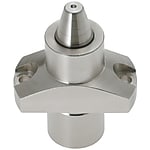
- Tapered Plunging Locating Pin, PICP series from MISUMI.
- The tapered section holds a workpiece, which enables positioning without wobbling.
- The pin of Tapered Plunging Locating Pin, PICP series is made of SKD11 with hardness level at 60~63HRC.
- The body of Tapered Plunging Locating Pin, PICP series is made of S45C.
- The spring part of Tapered Plunging Locating Pin, PICP series is made of SWP-B.
- Variation of PICP series have 2 types available, PICP6 or PICP10.- Volume Discount
Basic Shape Environmentally friendly Characteristics/Applications Insertion Guide Tip Shape Insertion Guide Tip Type Insertion Guide Specifications Mounting Side Shape Surface Treatment Heat Treatment Material Insertion Guide Outer Dia. D1(mm) Insertion Guide Tolerance Mounting Side Outer Dia. d(mm) Mounting Side Tolerance Cleaning Method - - - - - - - - - Steel 8.2 ~ 12.2 - 15 ~ 19 - - From: ₹ 5,091.10 Days to Ship: 6 Day(s) or more
6 Day(s) or more
-
You can add up to 6 items per a category to the compare list.
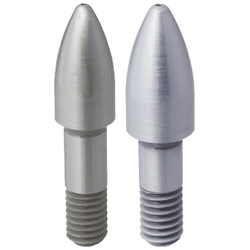
Locating Pins - Large Head, Bullet Nose, Compact - Threaded
MISUMI
- Locating Pins - Large Head, Bullet Nose, Compact – Threaded from MISUMI.
- R shape at insertion guide enables smooth insertion of workpiece. Compact Type with specifiable shorter L dimension.
- Polished, centering hole is may not be on all SUS304 Pins.
- The material of pin can be selected 3 types, steel SKS3 Equivalent, stainless steel SUS304, SUS440C or 13Cr stainless.
- The tightening torque (ref. value) for hardened products is strength class 8.8. Not applicable when using locking materials or lock washers.Basic Shape Environmentally friendly Characteristics/Applications Insertion Guide Tip Shape Insertion Guide Tip Type Insertion Guide Specifications Mounting Side Shape Surface Treatment Heat Treatment Material Insertion Guide Outer Dia. D1(mm) Insertion Guide Tolerance Mounting Side Outer Dia. d(mm) Mounting Side Tolerance Cleaning Method Large Head - - Round Bullet Nose Not Provided Threaded Not Provided / Hard Chrome Plating Not Provided / Directly Quenching Steel / Stainless Steel 3.5 ~ 15 0/-0.01 3 ~ 10 g6 - Days to Ship: 8 Day(s) or more
8 Day(s) or more
-
You can add up to 6 items per a category to the compare list.
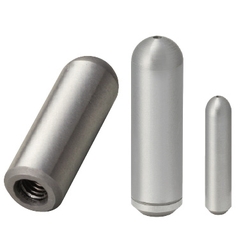
Locating Pins - Straight, Sphere (Tapped)
MISUMI
- Locating Pins - Straight, Sphere (Tapped) from MISUMI.
- The sphere head can prevent the mating side from being scratched. Selectable tolerance with each dimension configurable.
- SUS440C or 13Cr stainless has an identification groove at any position on D part.
- When the D dimension is small, a centering hole will cause the sphere section to become small.
- On some combination of dimensions, the center hole may not be available.
- Polishing and centering hole is sometimes not available for SUS304.Basic Shape Environmentally friendly Characteristics/Applications Insertion Guide Tip Shape Insertion Guide Tip Type Insertion Guide Specifications Mounting Side Shape Surface Treatment Heat Treatment Material Insertion Guide Outer Dia. D1(mm) Insertion Guide Tolerance Mounting Side Outer Dia. d(mm) Mounting Side Tolerance Cleaning Method Straight / Air Vent - - Round Spherical Not Provided Tapped Not Provided / Hard Chrome Plating Not Provided / Directly Quenching Steel / Stainless Steel 5 ~ 10 g6 ~ h7 5 ~ 10 g6 ~ h7 - Days to Ship: 6 Day(s) or more
6 Day(s) or more
-
Economy series
You can add up to 6 items per a category to the compare list.
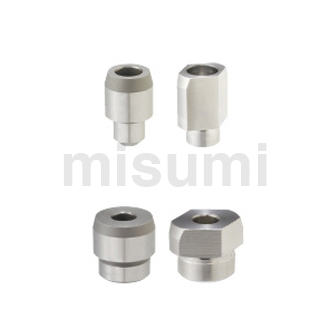 MiSUMi Economy
Locating Pins Large Head, Tapered, Screw Mounted, Standard/Compact
MiSUMi EconomyMISUMI
New at MISUMI? Get 20% Discount on your First Purchase. Click to Register Now
Basic Shape Environmentally friendly Characteristics/Applications Insertion Guide Tip Shape Insertion Guide Tip Type Insertion Guide Specifications Mounting Side Shape Surface Treatment Heat Treatment Material Insertion Guide Outer Dia. D1(mm) Insertion Guide Tolerance Mounting Side Outer Dia. d(mm) Mounting Side Tolerance Cleaning Method Large Head / Screw Mounted - - Round / Diamond Tapered With Screw Mount Hole Straight (Press-Fit) Not Provided / Hard Chrome Plating Not Provided / Directly Quenching - 11 ~ 30 0/-0.02 10 ~ 20 - - Days to Ship: 6 Day(s)
6 Day(s)
-
Economy series
You can add up to 6 items per a category to the compare list.
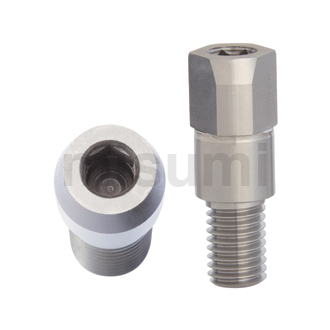 MiSUMi Economy
Locating Pins Large Head, Tapered, Threaded, Hex Socket
MiSUMi EconomyMISUMI
New at MISUMI? Get 20% Discount on your First Purchase. Click to Register Now
Basic Shape Environmentally friendly Characteristics/Applications Insertion Guide Tip Shape Insertion Guide Tip Type Insertion Guide Specifications Mounting Side Shape Surface Treatment Heat Treatment Material Insertion Guide Outer Dia. D1(mm) Insertion Guide Tolerance Mounting Side Outer Dia. d(mm) Mounting Side Tolerance Cleaning Method Large Head - - Round / Diamond Tapered With Hex Socket Threaded Not Provided / Hard Chrome Plating Not Provided / Directly Quenching - 5.5 ~ 30 0/-0.02 3 ~ 20 - - Days to Ship: 6 Day(s)
6 Day(s)
-
Economy series
You can add up to 6 items per a category to the compare list.
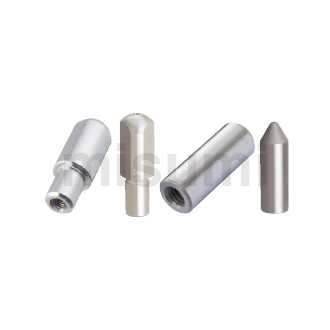 MiSUMi Economy
Locating Pins Tip Shape Selectable, Tapped
MiSUMi EconomyMISUMI
New at MISUMI? Get 20% Discount on your First Purchase. Click to Register Now
Basic Shape Environmentally friendly Characteristics/Applications Insertion Guide Tip Shape Insertion Guide Tip Type Insertion Guide Specifications Mounting Side Shape Surface Treatment Heat Treatment Material Insertion Guide Outer Dia. D1(mm) Insertion Guide Tolerance Mounting Side Outer Dia. d(mm) Mounting Side Tolerance Cleaning Method Large Head / Straight / Air Vent - - Round / Diamond Tapered / Taper R / R Not Provided Tapped Not Provided / Black Oxide / Hard Chrome Plating Not Provided / Directly Quenching - 6 ~ 35 0/-0.02 6 ~ 20T - - Days to Ship: 6 Day(s)
6 Day(s)
-
You can add up to 6 items per a category to the compare list.
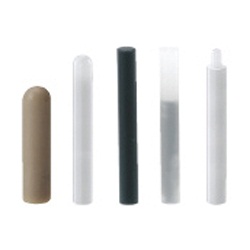
Locating Pins - Plastic, Small Diameter
MISUMI
- Locating Pins - Plastic, Small Diameter from MISUMI.
- Having a metal core, it is less prone to be broken when used for side locating.
- The outer diameter tolerance is the result of measurement at room temperature.
- Core Rod material of locating pin is made of SUS304.
- There is a flat part of Ø0.2 or below at the tip of Straight Type, Spherical Type and Small Head Type.
- MC nylon of flat tip type is not available.Basic Shape Environmentally friendly Characteristics/Applications Insertion Guide Tip Shape Insertion Guide Tip Type Insertion Guide Specifications Mounting Side Shape Surface Treatment Heat Treatment Material Insertion Guide Outer Dia. D1(mm) Insertion Guide Tolerance Mounting Side Outer Dia. d(mm) Mounting Side Tolerance Cleaning Method Small Head / Straight / Air Vent - - Round Spherical / Flat Not Provided Straight (Press-Fit) Not Provided Not Provided Resin 1 ~ 2.9 g6 ~ h7 - g6 ~ h7 - Days to Ship: 8 Day(s) or more
8 Day(s) or more
-
You can add up to 6 items per a category to the compare list.
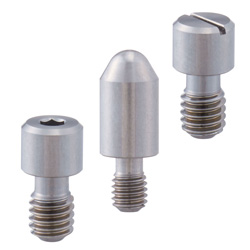
Locating Pins - Sphere Small Head - Press Fit
MISUMI
Full Thread Type has been newly added to the High Hardness Stainless Steel Locating Pin product line-up. For orders of up to 1,000 pcs., 7th day shipping is available.
Basic Shape Environmentally friendly Characteristics/Applications Insertion Guide Tip Shape Insertion Guide Tip Type Insertion Guide Specifications Mounting Side Shape Surface Treatment Heat Treatment Material Insertion Guide Outer Dia. D1(mm) Insertion Guide Tolerance Mounting Side Outer Dia. d(mm) Mounting Side Tolerance Cleaning Method Large Head - - Round Tapered / Taper R / R - - Not Provided Not Provided Stainless Steel 3.5 ~ 17.5 - - - - Days to Ship: 8 Day(s) or more
8 Day(s) or more
-
You can add up to 6 items per a category to the compare list.
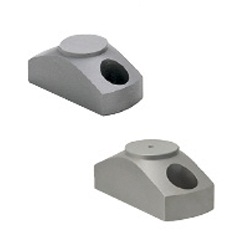
MISUMI
Seating Sensor Hole Type for confirming workpiece seating is now available.
- Volume Discount
Basic Shape Environmentally friendly Characteristics/Applications Insertion Guide Tip Shape Insertion Guide Tip Type Insertion Guide Specifications Mounting Side Shape Surface Treatment Heat Treatment Material Insertion Guide Outer Dia. D1(mm) Insertion Guide Tolerance Mounting Side Outer Dia. d(mm) Mounting Side Tolerance Cleaning Method Flanged - - Round Flat Not Provided Straight (Press-Fit) Not Provided Not Provided Steel 20 - - - - Days to Ship: 6 Day(s) or more
6 Day(s) or more
-
You can add up to 6 items per a category to the compare list.
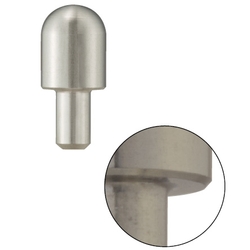
Locating Pins - High Hardness Stainless Steel Sphere Large Head (Press Fit)
MISUMI
- Locating Pins - High Hardness Stainless Steel Sphere Large Head (Press Fit) from MISUMI.
- Sphere Large Head with each dimension configurable. We reduced the price drastically compared to the conventional products.
- The material of this locating pin is made of High hardness stainless steel with a hardness level at 35HRC~.
- If the diameter exceeds Ø10, core hardness may be 30HRC~.
- For high hardness stainless steel sphere large head type, the configurable range of dimensions has been further widened.Basic Shape Environmentally friendly Characteristics/Applications Insertion Guide Tip Shape Insertion Guide Tip Type Insertion Guide Specifications Mounting Side Shape Surface Treatment Heat Treatment Material Insertion Guide Outer Dia. D1(mm) Insertion Guide Tolerance Mounting Side Outer Dia. d(mm) Mounting Side Tolerance Cleaning Method Large Head - - Round / Diamond Spherical Not Provided Straight (Press-Fit) Not Provided Not Provided Stainless Steel 2.5 ~ 17.5 0/-0.01 2 ~ 12 g6 ~ h7 - Days to Ship: 8 Day(s) or more
8 Day(s) or more
-
You can add up to 6 items per a category to the compare list.
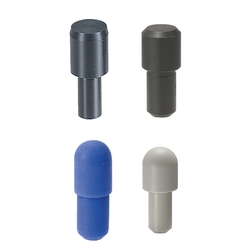
Locating Pins - Plastic, Large Head - Press Fit
MISUMI
- Locating Pins - Plastic, Large Head - Press Fit from MISUMI.
- Plastic Locating Pins which prevent workpiece damage.
- Insertion guide tip type can be selected 3 types, Tapered, Flat and Spherical.
- The outer diameter tolerance is the result of measurement at room temperature.
- The material of locating pin can be selected 4 types, Polyacetal (Black), MC Nylon (Blue), Conductive MC Nylon CDR2 (Black), or PEEK (Natural Ivory).
- The mounting method is press fit, with m6 tolerance.Basic Shape Environmentally friendly Characteristics/Applications Insertion Guide Tip Shape Insertion Guide Tip Type Insertion Guide Specifications Mounting Side Shape Surface Treatment Heat Treatment Material Insertion Guide Outer Dia. D1(mm) Insertion Guide Tolerance Mounting Side Outer Dia. d(mm) Mounting Side Tolerance Cleaning Method Large Head - - Round Tapered / Spherical / Flat Not Provided Straight (Press-Fit) Not Provided Not Provided Resin 1.5 ~ 15 0/-0.05 1 ~ 10 m6 - Days to Ship: 8 Day(s) or more
8 Day(s) or more
-
You can add up to 6 items per a category to the compare list.
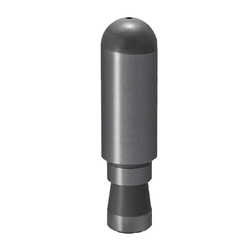
Locating Pins - Sphere Large/Small Head (Set Screw-Circumference Groove Shape)
MISUMI
- Locating Pins - Sphere Large/Small Head (Set Screw-Circumference Groove Shape) from MISUMI.
- Large Head/Small Head, Tapered, Set Screw Type. Selectable from Circumference Groove, Notched and Set Screw Flat Shapes.
- The material of locating pin can be selected 3 types, steel SKS3 Equivalent, stainless steel SUS304, SUS440C or 13Cr stainless.
- SUS440C or 13Cr stainless has an identification groove at any position on D part.
- When the P dimension is small, a centering hole will cause the sphere section to become small.
- The spherical head may be polished.Basic Shape Environmentally friendly Characteristics/Applications Insertion Guide Tip Shape Insertion Guide Tip Type Insertion Guide Specifications Mounting Side Shape Surface Treatment Heat Treatment Material Insertion Guide Outer Dia. D1(mm) Insertion Guide Tolerance Mounting Side Outer Dia. d(mm) Mounting Side Tolerance Cleaning Method Large Head / Small Head - - Round / Diamond Spherical Not Provided Circumference Groove Not Provided / Hard Chrome Plating Not Provided / Directly Quenching Steel / Stainless Steel 2 ~ 30 0/-0.01 6 ~ 20 g6 - Days to Ship: 6 Day(s) or more
6 Day(s) or more
-
You can add up to 6 items per a category to the compare list.
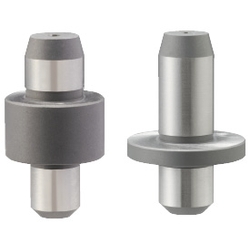
Locating Pins - Shouldered (Tapered - Shoulder Thickness Configurable-Press Fit)
MISUMI
- Locating Pins - Shouldered (Tapered - Shoulder Thickness Configurable-Press Fit) from MISUMI.
- Insertion guide tip shape can be selected 2 types, round, and diamond.
- SUS440C or 13Cr stainless has an identification groove on D part.
- A machining step remains on the shoulder top for Diamond Shape.
- SUS304 may not be polished and may have no centering hole.
- The material of pin can be selected 3 types, steel SKS3 Equivalent, stainless steel SUS304, SUS440C or 13Cr stainless.Basic Shape Environmentally friendly Characteristics/Applications Insertion Guide Tip Shape Insertion Guide Tip Type Insertion Guide Specifications Mounting Side Shape Surface Treatment Heat Treatment Material Insertion Guide Outer Dia. D1(mm) Insertion Guide Tolerance Mounting Side Outer Dia. d(mm) Mounting Side Tolerance Cleaning Method Shouldered - - Round / Diamond Tapered Not Provided Straight (Press-Fit) Not Provided / Hard Chrome Plating Not Provided / Directly Quenching Steel / Stainless Steel 1 ~ 20 0/-0.01 2 ~ 20 m6 - Days to Ship: 6 Day(s) or more
6 Day(s) or more
-
Economy series
You can add up to 6 items per a category to the compare list.
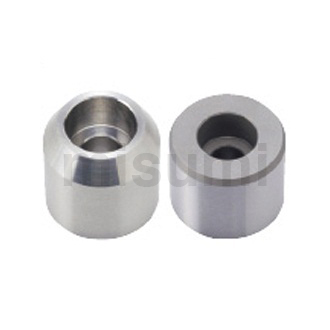 MiSUMi EconomyMiSUMi Economy
MISUMI
New at MISUMI? Get 20% Discount on your First Purchase. Click to Register Now
Basic Shape Environmentally friendly Characteristics/Applications Insertion Guide Tip Shape Insertion Guide Tip Type Insertion Guide Specifications Mounting Side Shape Surface Treatment Heat Treatment Material Insertion Guide Outer Dia. D1(mm) Insertion Guide Tolerance Mounting Side Outer Dia. d(mm) Mounting Side Tolerance Cleaning Method Screw Mounted - - Round Tapered With Screw Mount Hole Straight (Press-Fit) Not Provided / Black Oxide / Hard Chrome Plating Not Provided / Directly Quenching - 11 ~ 25 0/-0.02 - 0/-0.02 - Days to Ship: 6 Day(s)
6 Day(s)
-
You can add up to 6 items per a category to the compare list.
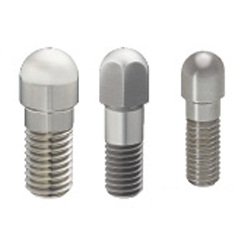
Locating Pins - Sphere Large Head (Threaded)
MISUMI
- Locating Pins - Sphere Large Head (Threaded) from MISUMI.
- Sphere Large Head, Threaded + Lock Nut Type. Improved maintainability compared to Press Fit Type.
- Polished, Centering hole is sometimes not available for SUS304.
- SUS440C or 13Cr stainless has an identification groove at any position on D part.
- The tightening torque (ref. value) for hardened products is strength class 8.8. Not applicable when using locking materials or lock washers.
- Provided 3 options of alteration, Sphere tip (RC), Wrench Hole Machining (LAC), or Wrench Flats (SC).- Volume Discount
Basic Shape Environmentally friendly Characteristics/Applications Insertion Guide Tip Shape Insertion Guide Tip Type Insertion Guide Specifications Mounting Side Shape Surface Treatment Heat Treatment Material Insertion Guide Outer Dia. D1(mm) Insertion Guide Tolerance Mounting Side Outer Dia. d(mm) Mounting Side Tolerance Cleaning Method Large Head - - Round / Diamond Spherical Not Provided Threaded Not Provided / Hard Chrome Plating / Buffed / Hard Chrome Plating + Buffed Not Provided / Directly Quenching Steel / Stainless Steel 3 ~ 30 0/-0.01 3 ~ 20 g6 - Days to Ship: 6 Day(s) or more
6 Day(s) or more
-
You can add up to 6 items per a category to the compare list.
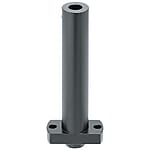
Holders for Locating Pins - Compact Flange
MISUMI
Use in combination with Locating Pins Set Screw Type or Internal Thread Type enables locating at higher position.
Basic Shape Environmentally friendly Characteristics/Applications Insertion Guide Tip Shape Insertion Guide Tip Type Insertion Guide Specifications Mounting Side Shape Surface Treatment Heat Treatment Material Insertion Guide Outer Dia. D1(mm) Insertion Guide Tolerance Mounting Side Outer Dia. d(mm) Mounting Side Tolerance Cleaning Method Flanged - - Round Flat Not Provided Straight (Press-Fit) Black Oxide Not Provided Steel - h7 - h7 - Days to Ship: 8 Day(s) or more
8 Day(s) or more
-
You can add up to 6 items per a category to the compare list.
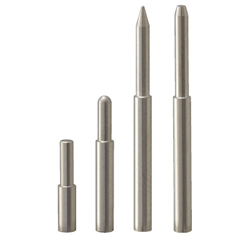
Small Diameter Locating Pins - High Hardness Stainless Steel - Small Head
MISUMI
"High accuracy positioning is available, because the O.D. can be configured in 0.01mm increment on either of the mounting side or the locating side."
Basic Shape Environmentally friendly Characteristics/Applications Insertion Guide Tip Shape Insertion Guide Tip Type Insertion Guide Specifications Mounting Side Shape Surface Treatment Heat Treatment Material Insertion Guide Outer Dia. D1(mm) Insertion Guide Tolerance Mounting Side Outer Dia. d(mm) Mounting Side Tolerance Cleaning Method Small Head - - Round Tapered / Taper R / Spherical / Flat Not Provided Straight (Press-Fit) Not Provided Not Provided Stainless Steel 0.5 ~ 2.99 0/-0.01 0.51 ~ 3 0/-0.01 - Days to Ship: 8 Day(s) or more
8 Day(s) or more
-
You can add up to 6 items per a category to the compare list.
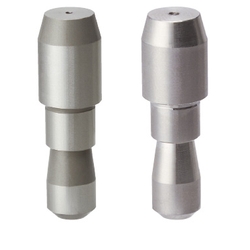
Locating Pins - Large/Small Head, Tapered (Set Screw-Circumference Groove Shape)
MISUMI
- Locating Pins - Large/Small Head, Tapered (Set Screw-Circumference Groove Shape) from MISUMI.
- Large Head/Small Head, Tapered, Set Screw Type. Selectable from Circumference Groove, Notched and Set Screw Flat Shapes.
- Insertion guide tip shape can be selected 2 types, round, and diamond.
- SUS440C or 13Cr stainless has an identification groove at any position on D part.
- SUS304 may not be polished and may have no centering hole.
- The material of pin can be selected 3 types, steel SKS3 Equivalent, stainless steel SUS304, SUS440C or 13Cr stainless.Basic Shape Environmentally friendly Characteristics/Applications Insertion Guide Tip Shape Insertion Guide Tip Type Insertion Guide Specifications Mounting Side Shape Surface Treatment Heat Treatment Material Insertion Guide Outer Dia. D1(mm) Insertion Guide Tolerance Mounting Side Outer Dia. d(mm) Mounting Side Tolerance Cleaning Method Large Head / Small Head - - Round / Diamond Tapered Not Provided Circumference Groove Not Provided / Hard Chrome Plating Not Provided / Directly Quenching Steel / Stainless Steel 2 ~ 30 0/-0.01 6 ~ 20 g6 - Days to Ship: 6 Day(s) or more
6 Day(s) or more
-
You can add up to 6 items per a category to the compare list.
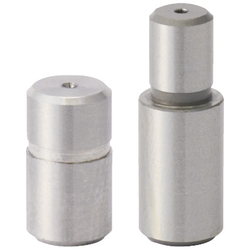
Locating Pins - Small Flat Head (D,P Tolerance Selectable-Press Fit)
MISUMI
Small Flat Head with each dimension configurable. The tolerances on both ends are also configurable.
Basic Shape Environmentally friendly Characteristics/Applications Insertion Guide Tip Shape Insertion Guide Tip Type Insertion Guide Specifications Mounting Side Shape Surface Treatment Heat Treatment Material Insertion Guide Outer Dia. D1(mm) Insertion Guide Tolerance Mounting Side Outer Dia. d(mm) Mounting Side Tolerance Cleaning Method Small Head - - Round Flat Not Provided Straight (Press-Fit) Not Provided / Hard Chrome Plating Not Provided / Directly Quenching Steel / Stainless Steel 1 ~ 20 0/-0.01 ~ h7 2 ~ 20 0/-0.005 ~ h7 - Days to Ship: 6 Day(s) or more
6 Day(s) or more
-
You can add up to 6 items per a category to the compare list.
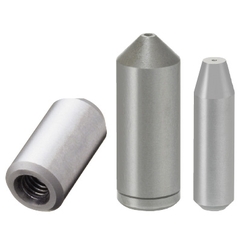
Locating Pins - Straight, Tapered (Tapped)
MISUMI
- Locating Pins - Straight, Tapered (Tapped) from MISUMI.
- The short lead time and economical price are achieved by narrowing down the tolerance and dimensions.
- The material of pin can be selected 2 types, steel SKS3 Equivalent or stainless steel SUS304.
- On some combination of dimensions, the center hole may not be available.
- Polishing and centering hole is sometimes not available for SUS304.
- The tightening torque (ref. value) for hardened products is strength class 8.8. Not applicable when using locking materials or lock washers.Basic Shape Environmentally friendly Characteristics/Applications Insertion Guide Tip Shape Insertion Guide Tip Type Insertion Guide Specifications Mounting Side Shape Surface Treatment Heat Treatment Material Insertion Guide Outer Dia. D1(mm) Insertion Guide Tolerance Mounting Side Outer Dia. d(mm) Mounting Side Tolerance Cleaning Method Straight / Air Vent - - Round Tapered Not Provided Tapped Not Provided / Hard Chrome Plating Not Provided / Directly Quenching Steel / Stainless Steel 5 ~ 10 g6 ~ h7 5 ~ 10 g6 ~ h7 - Days to Ship: 6 Day(s) or more
6 Day(s) or more
-
You can add up to 6 items per a category to the compare list.
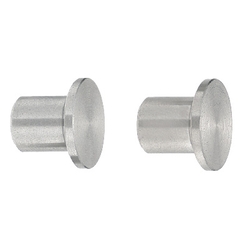
Locating Pins for Grippers - Stepped
MISUMI
[Features]Positioning pin stepped type used for mounting an opening / closing chuck.
Basic Shape Environmentally friendly Characteristics/Applications Insertion Guide Tip Shape Insertion Guide Tip Type Insertion Guide Specifications Mounting Side Shape Surface Treatment Heat Treatment Material Insertion Guide Outer Dia. D1(mm) Insertion Guide Tolerance Mounting Side Outer Dia. d(mm) Mounting Side Tolerance Cleaning Method Large Head - - Round Flat Not Provided Straight (Press-Fit) Not Provided / Electroless Nickel Plating Not Provided Steel / Stainless Steel 6 ~ 32 g6 5 ~ 12 m6 - Days to Ship: 6 Day(s) or more
6 Day(s) or more
-
You can add up to 6 items per a category to the compare list.
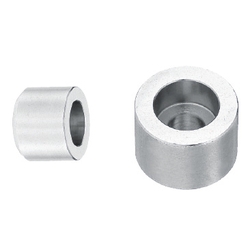
Locating Pins for Grippers - Counterbored
MISUMI
[Features]Positioning pin counterbore type used for mounting an opening / closing chuck.
Basic Shape Environmentally friendly Characteristics/Applications Insertion Guide Tip Shape Insertion Guide Tip Type Insertion Guide Specifications Mounting Side Shape Surface Treatment Heat Treatment Material Insertion Guide Outer Dia. D1(mm) Insertion Guide Tolerance Mounting Side Outer Dia. d(mm) Mounting Side Tolerance Cleaning Method Screw Mounted - - Round Flat With Screw Mount Hole Straight (Press-Fit) Not Provided / Electroless Nickel Plating Not Provided Steel / Stainless Steel - g6 10 ~ 32 g6 - Days to Ship: 6 Day(s) or more
6 Day(s) or more
-
You can add up to 6 items per a category to the compare list.
![[Clean & Pack] Small Diameter Locating Pin - Straight](//content.misumi-ec.com/image/upload/f_auto,q_auto,t_product_view_b/v1/p/jp/product/series/110310664829/110310664829_001_20230911105917.jpg?$product_view_b$)
[Clean & Pack] Small Diameter Locating Pin - Straight
MISUMI
Three types of cleaning methods are available: degreasing, precision cleaning, and electrolytic polishing + precision cleaning. They can be ordered from one piece with the standard part number.
This eliminates the need for customer cleaning or outsourced cleaning, reducing the amount of time and effort required.■Part Number for Clean & Pack Products·Degreasing (Anti-rust single packing) : Part Number SL-□□ ·Precision cleaning (Degassing double packing) : Part Number SH-□□ ·Electrolytic polishing + precision cleaning (Degassing double packing) : Part Number SHD-□□ Product Part Number Cleaning Method Packaging Type Effects Compared to Uncleaned Product Environment (Standard) Process SL-□□ Degreasing Anti-rust packing Oil removal General environment Regular assembly process Post battery assembly process SH-□□ Precision cleaning Degassing double packing Oil removal
Dust removalClean environment (Class 10 to 1,000) Battery assembly process LCD-related post assembly process In-vehicle camera assembly process SHD-□□ Electrolytic polishing + precision cleaning Degassing double packing Oil removal
Dust removal
Outgas reductionVacuum environment
Clean environment (Class 10 to 1,000)Pre-semiconductor process Liquid crystal deposition process Pre-OLED process ■Notes
Cleaning also removes rust prevention oil, which may make the product more susceptible to rusting than an uncleaned product.
Please be careful about the application location and storage environment.- Volume Discount
Basic Shape Environmentally friendly Characteristics/Applications Insertion Guide Tip Shape Insertion Guide Tip Type Insertion Guide Specifications Mounting Side Shape Surface Treatment Heat Treatment Material Insertion Guide Outer Dia. D1(mm) Insertion Guide Tolerance Mounting Side Outer Dia. d(mm) Mounting Side Tolerance Cleaning Method Straight RoHS Compliant (10 Substances) Clean Washed Round Tapered / Taper R / Spherical / Flat Not Provided Straight (Press-Fit) Not Provided Not Provided Stainless Steel 1 ~ 3 0/-0.01 ~ 0.005/0 0.5 ~ 3 0/-0.01 ~ 0.005/0 Degreasing / Precision Cleaning / Electrolytic Polishing + Precision Cleaning Days to Ship: 8 Day(s) or more
8 Day(s) or more
-
Economy series
You can add up to 6 items per a category to the compare list.
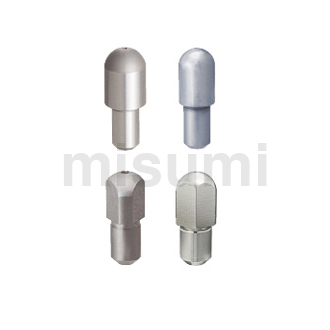 MiSUMi Economy
Locating Pins Large Head, Spherical, Press Fit, Standard
MiSUMi EconomyMISUMI
New at MISUMI? Get 20% Discount on your First Purchase. Click to Register Now
Basic Shape Environmentally friendly Characteristics/Applications Insertion Guide Tip Shape Insertion Guide Tip Type Insertion Guide Specifications Mounting Side Shape Surface Treatment Heat Treatment Material Insertion Guide Outer Dia. D1(mm) Insertion Guide Tolerance Mounting Side Outer Dia. d(mm) Mounting Side Tolerance Cleaning Method Large Head - - Round / Diamond Spherical Not Provided Straight (Press-Fit) Not Provided / Hard Chrome Plating / Buffed / Hard Chrome Plating + Buffed Not Provided / Directly Quenching - 2.5 ~ 30 0/-0.02 2 ~ 20 - - Days to Ship: 6 Day(s)
6 Day(s)
-
You can add up to 6 items per a category to the compare list.
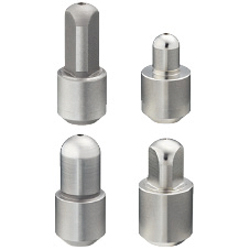
Locating Pins - Sphere Small Head (Press Fit)
MISUMI
- Locating Pins - Sphere Small Head (Press Fit) from MISUMI.
- The Sphere Head can prevent the mating material from being scratched even when you insert by sliding horizontally against the pin end.
- The material of locating pin can be selected 3 types, steel SKS3 Equivalent, stainless steel SUS304, SUS440C or 13Cr stainless.
- Polished, centering hole is sometimes not available for SUS304.
- SUS440C or 13Cr stainless has an identification groove at any position on D part.
- Insertion guide tip shape can be selected 2 types, round, and diamond.- Volume Discount
Basic Shape Environmentally friendly Characteristics/Applications Insertion Guide Tip Shape Insertion Guide Tip Type Insertion Guide Specifications Mounting Side Shape Surface Treatment Heat Treatment Material Insertion Guide Outer Dia. D1(mm) Insertion Guide Tolerance Mounting Side Outer Dia. d(mm) Mounting Side Tolerance Cleaning Method Small Head - - Round / Diamond Spherical Not Provided Straight (Press-Fit) Not Provided / Hard Chrome Plating / Buffed / Hard Chrome Plating + Buffed Not Provided / Directly Quenching Steel / Stainless Steel 1 ~ 20 0/-0.01 2 ~ 20 m6 ~ p6 - Days to Ship: 6 Day(s) or more
6 Day(s) or more
-
You can add up to 6 items per a category to the compare list.
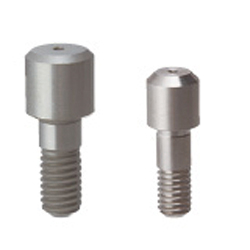
Locating Pins - Large Flat Head (Threaded)
MISUMI
- Locating Pins - Large Flat Head (Threaded) from MISUMI.
- Large Flat Head, Press Fit + Lock Nut Type. Improved maintainability compared to Press Fit Type.
- Polished, Centering hole is sometimes not available for SUS304.
- SUS440C or 13Cr stainless has an identification groove at any position on D part.
- The tightening torque (ref. value) for hardened products is strength class 8.8. Not applicable when using locking materials or lock washers.
- Provided 4 options of alteration, Sphere tip (RC), C Chamfered size (CN), Hex Socket Machining (RAC) or Wrench Hole Machining (LAC)- Volume Discount
Basic Shape Environmentally friendly Characteristics/Applications Insertion Guide Tip Shape Insertion Guide Tip Type Insertion Guide Specifications Mounting Side Shape Surface Treatment Heat Treatment Material Insertion Guide Outer Dia. D1(mm) Insertion Guide Tolerance Mounting Side Outer Dia. d(mm) Mounting Side Tolerance Cleaning Method Large Head - - Round Flat Not Provided Threaded Not Provided / Hard Chrome Plating Not Provided / Directly Quenching Steel / Stainless Steel 3 ~ 30 h6 3 ~ 20 g6 - Days to Ship: 6 Day(s) or more
6 Day(s) or more
-
You can add up to 6 items per a category to the compare list.
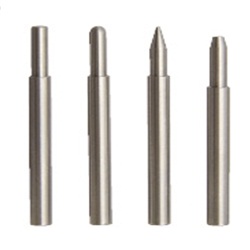
Small Diameter Locating Pin - Small Head / Press Fit
MISUMI
- Small Diameter Locating Pin - Small Head / Press Fit from MISUMI.
- Insertion Guide Tip Type can be selected 4 types, Tapered, Taper R, Spherical and Flat.
- Material code SG and DG are applicable to L configurable type of sphere only.
- L selectable type is applicable to spherical tip type only.
- SUS304 may not be polished.
- Chamfering of mounting portion and change of tolerance are available as alterations.
- Shaft diameter can be configured up to 3 mm.Basic Shape Environmentally friendly Characteristics/Applications Insertion Guide Tip Shape Insertion Guide Tip Type Insertion Guide Specifications Mounting Side Shape Surface Treatment Heat Treatment Material Insertion Guide Outer Dia. D1(mm) Insertion Guide Tolerance Mounting Side Outer Dia. d(mm) Mounting Side Tolerance Cleaning Method Small Head - - Round Tapered / Taper R / Spherical / Flat Not Provided Straight (Press-Fit) Not Provided Not Provided / Directly Quenching Steel / Stainless Steel 0.5 ~ 2.99 0/-0.01 ~ 0.005/0 0.51 ~ 3 0/-0.01 ~ 0.005/0 - Days to Ship: 7 Day(s) or more
7 Day(s) or more
-
You can add up to 6 items per a category to the compare list.
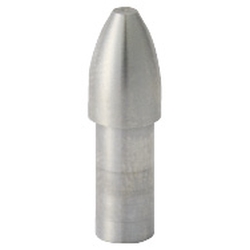
Locating Pins - Pilot Pins - Standard / Press Fit
MISUMI
[Features]It is inserted and positioned for purposes such as preventing pitch deviation. It is installed by press-fitting.
Basic Shape Environmentally friendly Characteristics/Applications Insertion Guide Tip Shape Insertion Guide Tip Type Insertion Guide Specifications Mounting Side Shape Surface Treatment Heat Treatment Material Insertion Guide Outer Dia. D1(mm) Insertion Guide Tolerance Mounting Side Outer Dia. d(mm) Mounting Side Tolerance Cleaning Method Large Head - - Round Round Tapered Not Provided Straight (Press-Fit) Not Provided Not Provided / Directly Quenching Steel / Stainless Steel 1.5 ~ 15 0/-0.01 1 ~ 10 0.012/0.007 - Days to Ship: 8 Day(s) or more
8 Day(s) or more
-
You can add up to 6 items per a category to the compare list.
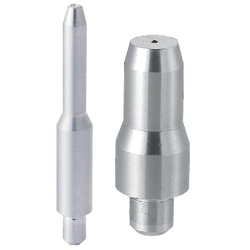
Locating Pins Double Stepped - Press Fit
MISUMI
[Features]Suitable for positioning workpieces with different hole diameters. It is installed by press-fitting.
Basic Shape Environmentally friendly Characteristics/Applications Insertion Guide Tip Shape Insertion Guide Tip Type Insertion Guide Specifications Mounting Side Shape Surface Treatment Heat Treatment Material Insertion Guide Outer Dia. D1(mm) Insertion Guide Tolerance Mounting Side Outer Dia. d(mm) Mounting Side Tolerance Cleaning Method Double-Stepped - - Round Tapered Not Provided Straight (Press-Fit) Not Provided / Hard Chrome Plating Not Provided / Directly Quenching Steel / Stainless Steel 2 ~ 30 0/-0.01 2 ~ 20 m6 ~ p6 - Days to Ship: 7 Day(s) or more
7 Day(s) or more
-
You can add up to 6 items per a category to the compare list.
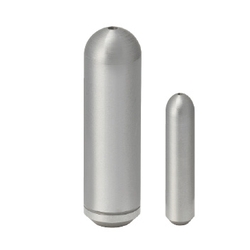
Locating Pins - Straight, Sphere (Press Fit)
MISUMI
- Locating Pins - Straight, Sphere (Press Fit) from MISUMI.
- The sphere head can prevent the mating side from being scratched. Selectable tolerance with each dimension configurable.
- SUS440C or 13Cr stainless has an identification groove at any position on D part.
- When the D dimension is small, a centering hole will cause the sphere section to become small.
- On some combination of dimensions, the center hole may not be available.
- Polishing and centering hole is sometimes not available for SUS304.Basic Shape Environmentally friendly Characteristics/Applications Insertion Guide Tip Shape Insertion Guide Tip Type Insertion Guide Specifications Mounting Side Shape Surface Treatment Heat Treatment Material Insertion Guide Outer Dia. D1(mm) Insertion Guide Tolerance Mounting Side Outer Dia. d(mm) Mounting Side Tolerance Cleaning Method Straight / Air Vent - - Round Spherical Not Provided Straight (Press-Fit) Not Provided / Hard Chrome Plating Not Provided / Directly Quenching Steel / Stainless Steel 1 ~ 10 g6 ~ h7 1 ~ 10 g6 ~ h7 - Days to Ship: 6 Day(s) or more
6 Day(s) or more
-
Economy series
You can add up to 6 items per a category to the compare list.
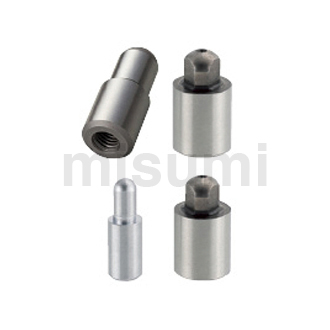 MiSUMi Economy
Locating Pins Small Head, Spherical, Tapped
MiSUMi EconomyMISUMI
New at MISUMI? Get 20% Discount on your First Purchase. Click to Register Now
Basic Shape Environmentally friendly Characteristics/Applications Insertion Guide Tip Shape Insertion Guide Tip Type Insertion Guide Specifications Mounting Side Shape Surface Treatment Heat Treatment Material Insertion Guide Outer Dia. D1(mm) Insertion Guide Tolerance Mounting Side Outer Dia. d(mm) Mounting Side Tolerance Cleaning Method Small Head - - Round / Diamond Spherical Not Provided Tapped Not Provided / Hard Chrome Plating Not Provided / Directly Quenching - 3 ~ 20 0/-0.02 5 ~ 20T - - Days to Ship: 6 Day(s)
6 Day(s)
-
You can add up to 6 items per a category to the compare list.
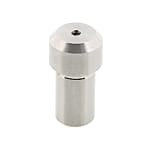
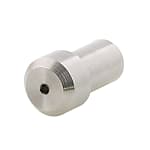
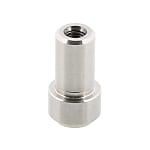
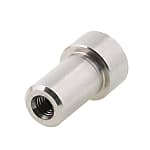
Locating Pins - Large Flat Head (Tapped)
MISUMI
- Locating Pins - Large Flat Head (Tapped) from MISUMI.
- Large Flat Head with the shape designed to be mounted from back using bolts. Improved maintainability compared to Press Fit Type.
- The material of locating pin can be selected 3 types, steel SKS3 Equivalent, stainless steel SUS304, SUS440C or 13Cr stainless.
- Polished, centering hole is sometimes not available for SUS304.
- SUS440C or 13Cr stainless has an identification groove at any position on D part.
- The tolerance of the mounting part is g6.- Volume Discount
Basic Shape Environmentally friendly Characteristics/Applications Insertion Guide Tip Shape Insertion Guide Tip Type Insertion Guide Specifications Mounting Side Shape Surface Treatment Heat Treatment Material Insertion Guide Outer Dia. D1(mm) Insertion Guide Tolerance Mounting Side Outer Dia. d(mm) Mounting Side Tolerance Cleaning Method Large Head - - Round Flat Not Provided Tapped Not Provided / Hard Chrome Plating Not Provided / Directly Quenching Steel / Stainless Steel 5 ~ 30 h6 5 ~ 20T g6 - Days to Ship: 6 Day(s) or more
6 Day(s) or more
-
You can add up to 6 items per a category to the compare list.
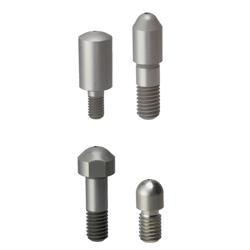
Locating Pins - Tip Shape Selectable (Tip Length Configurable-Threaded)
MISUMI
While it has the same shape as conventional Tip Shape Selectable Type (Shapes A and C only), its configurable range is different therefrom. Overall length of insertion guide, R length and tapered section length are configurable.
Basic Shape Environmentally friendly Characteristics/Applications Insertion Guide Tip Shape Insertion Guide Tip Type Insertion Guide Specifications Mounting Side Shape Surface Treatment Heat Treatment Material Insertion Guide Outer Dia. D1(mm) Insertion Guide Tolerance Mounting Side Outer Dia. d(mm) Mounting Side Tolerance Cleaning Method Large Head - - Round Taper R / R Not Provided Threaded Not Provided / Black Oxide / Hard Chrome Plating Not Provided / Directly Quenching Steel / Stainless Steel 4 ~ 30 0/-0.01 3 ~ 20 g6 - Days to Ship: 6 Day(s) or more
6 Day(s) or more
-
You can add up to 6 items per a category to the compare list.
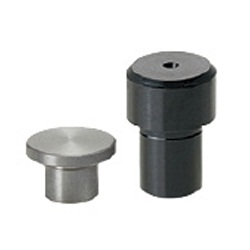
MISUMI
- Plate Centering Pins, BCMPA / CMPA / SCMPA series from MISUMI.
- Suitable for centering thin objects.
- Can be used for attaching gripper.
- Center holes may disappear depending on dimension B.
- The material of pin can be selected 2 types, steel S45C Equivalent or stainless steel SUS304.
- SUS304 Plate Centering Pins may not be polished and may have no centering hole.
- When the L dimension of tapped type is less than Mx4, the tapped hole or pilot hole for tapping may go through.Basic Shape Environmentally friendly Characteristics/Applications Insertion Guide Tip Shape Insertion Guide Tip Type Insertion Guide Specifications Mounting Side Shape Surface Treatment Heat Treatment Material Insertion Guide Outer Dia. D1(mm) Insertion Guide Tolerance Mounting Side Outer Dia. d(mm) Mounting Side Tolerance Cleaning Method Large Head - - Round Flat Not Provided Straight (Press-Fit) Not Provided / Black Oxide / Electroless Nickel Plating Not Provided Steel / Stainless Steel 3 ~ 40 g6 - g6 - Days to Ship: 6 Day(s) or more
6 Day(s) or more
-
You can add up to 6 items per a category to the compare list.
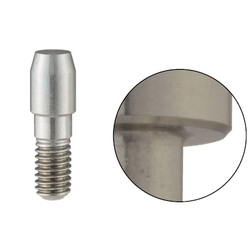
Locating Pins - High Hardness Stainless Steel Large Head, Tapered (Threaded)
MISUMI
Large Head Tapered with each dimension configurable. We reduced the price drastically compared to the conventional products.
Basic Shape Environmentally friendly Characteristics/Applications Insertion Guide Tip Shape Insertion Guide Tip Type Insertion Guide Specifications Mounting Side Shape Surface Treatment Heat Treatment Material Insertion Guide Outer Dia. D1(mm) Insertion Guide Tolerance Mounting Side Outer Dia. d(mm) Mounting Side Tolerance Cleaning Method Large Head - - Round / Diamond Tapered Not Provided Threaded Not Provided Not Provided Stainless Steel 3.5 ~ 17.5 0/-0.01 3 ~ 12 g6 ~ h7 - Days to Ship: 8 Day(s) or more
8 Day(s) or more
-
You can add up to 6 items per a category to the compare list.
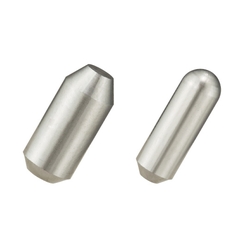
Locating Pins - High Hardness Stainless Steel, Straight (Press Fit)
MISUMI
- Locating Pins - High Hardness Stainless Steel, straight (Press Fit) from MISUMI.
- A straight positioning pin made of high hardness stainless steel.
- Insertion Guide Tip Type can be selected into 3 types, Tapered, Tapered R or Spherical.
- Tapped type locating pin provided tapped thread for disassembled.
- For tapped type, unless described otherwise on the drawing, the spec, design is the same as for Press fit type.
- The tightening torque (ref. value) is tightening torque strength class 10.9. Not applicable when using locking materials or lock washers.Basic Shape Environmentally friendly Characteristics/Applications Insertion Guide Tip Shape Insertion Guide Tip Type Insertion Guide Specifications Mounting Side Shape Surface Treatment Heat Treatment Material Insertion Guide Outer Dia. D1(mm) Insertion Guide Tolerance Mounting Side Outer Dia. d(mm) Mounting Side Tolerance Cleaning Method Straight / Air Vent - - Round Tapered / Spherical Not Provided Straight (Press-Fit) Not Provided Not Provided Stainless Steel - g6 ~ h7 3 ~ 10 g6 ~ h7 - Days to Ship: 8 Day(s) or more
8 Day(s) or more
-
You can add up to 6 items per a category to the compare list.
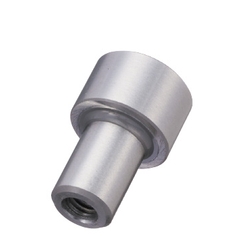
Locating Pins - Large Flat Head - Side Locating - Tapped
MISUMI
Grinding undercut shape and the pin material have been changed to give higher immunity against breaking for lateral load applications.
Basic Shape Environmentally friendly Characteristics/Applications Insertion Guide Tip Shape Insertion Guide Tip Type Insertion Guide Specifications Mounting Side Shape Surface Treatment Heat Treatment Material Insertion Guide Outer Dia. D1(mm) Insertion Guide Tolerance Mounting Side Outer Dia. d(mm) Mounting Side Tolerance Cleaning Method Large Head - - Round Flat Not Provided Tapped Not Provided Not Provided / Carburized Steel / Stainless Steel 10 ~ 30 0/-0.01 6 ~ 20 g6 - Days to Ship: 6 Day(s) or more
6 Day(s) or more
-
You can add up to 6 items per a category to the compare list.
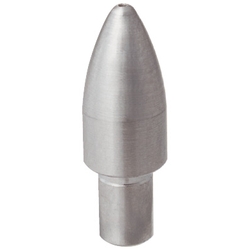
Locating Pins - Large Head, Bullet Nose, Compact - Press Fit
MISUMI
R shape at insertion guide enables smooth insertion of workpiece. Compact Type with specifiable shorter L dimension.
Basic Shape Environmentally friendly Characteristics/Applications Insertion Guide Tip Shape Insertion Guide Tip Type Insertion Guide Specifications Mounting Side Shape Surface Treatment Heat Treatment Material Insertion Guide Outer Dia. D1(mm) Insertion Guide Tolerance Mounting Side Outer Dia. d(mm) Mounting Side Tolerance Cleaning Method Large Head - - Round Bullet Nose Not Provided Straight (Press-Fit) Not Provided / Hard Chrome Plating Not Provided / Directly Quenching Steel / Stainless Steel 3 ~ 15 0/-0.01 2 ~ 10 m6 ~ p6 - Days to Ship: 8 Day(s) or more
8 Day(s) or more
![[Clean & Pack] Small Diameter Locating Pin - Straight](http://content.misumi-ec.com/image/upload/f_auto,q_auto,t_product_view_b/v1/p/jp/product/series/110310664829/110310664829_001_20230911105917.jpg?$product_view_b$)
| Brand |
|---|
| Product Series |
| CAD |
| From |
| Days to Ship |
| Basic Shape |
| Environmentally friendly |
| Characteristics/Applications |
| Insertion Guide Tip Shape |
| Insertion Guide Tip Type |
| Insertion Guide Specifications |
| Mounting Side Shape |
| Surface Treatment |
| Heat Treatment |
| Material |
| Insertion Guide Outer Dia. D1(mm) |
| Insertion Guide Tolerance |
| Mounting Side Outer Dia. d(mm) |
| Mounting Side Tolerance |
| Cleaning Method |
You can add up to 6 items per a category to the compare list.  | You can add up to 6 items per a category to the compare list. 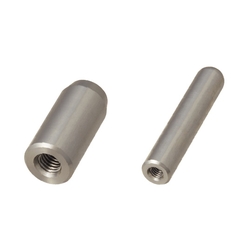 | You can add up to 6 items per a category to the compare list. 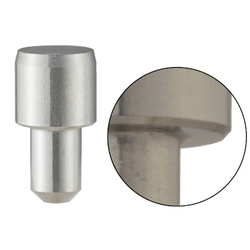 | You can add up to 6 items per a category to the compare list. 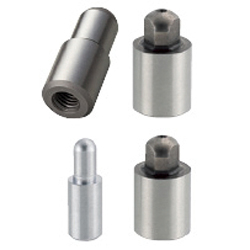 | You can add up to 6 items per a category to the compare list.  | You can add up to 6 items per a category to the compare list. 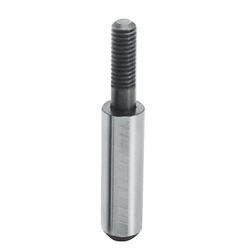 | You can add up to 6 items per a category to the compare list.  | You can add up to 6 items per a category to the compare list.  | You can add up to 6 items per a category to the compare list.  | You can add up to 6 items per a category to the compare list. 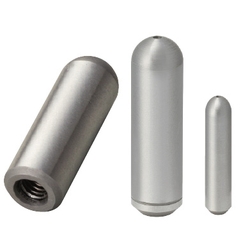 | You can add up to 6 items per a category to the compare list.  | You can add up to 6 items per a category to the compare list.  | You can add up to 6 items per a category to the compare list.  | You can add up to 6 items per a category to the compare list. 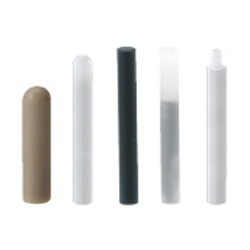 | You can add up to 6 items per a category to the compare list. 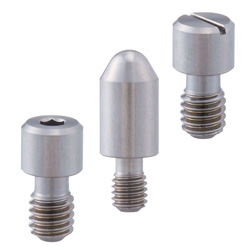 | You can add up to 6 items per a category to the compare list.  | You can add up to 6 items per a category to the compare list.  | You can add up to 6 items per a category to the compare list. 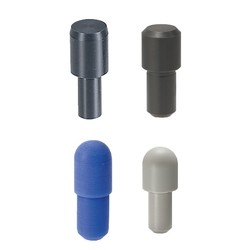 | You can add up to 6 items per a category to the compare list. 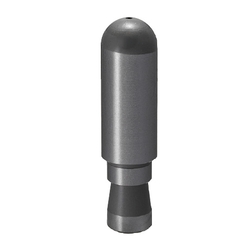 | You can add up to 6 items per a category to the compare list.  | You can add up to 6 items per a category to the compare list.  | You can add up to 6 items per a category to the compare list.  | You can add up to 6 items per a category to the compare list.  | You can add up to 6 items per a category to the compare list.  | You can add up to 6 items per a category to the compare list. 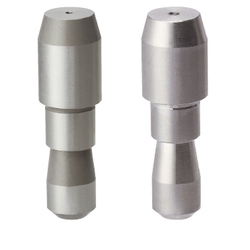 | You can add up to 6 items per a category to the compare list. 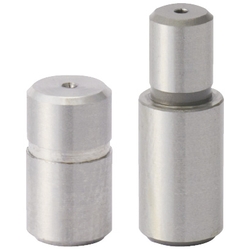 | You can add up to 6 items per a category to the compare list. 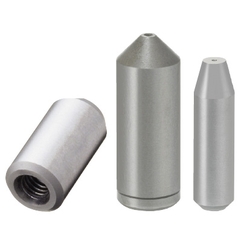 | You can add up to 6 items per a category to the compare list.  | You can add up to 6 items per a category to the compare list.  | You can add up to 6 items per a category to the compare list. ![[Clean & Pack] Small Diameter Locating Pin - Straight](http://content.misumi-ec.com/image/upload/f_auto,q_auto,t_product_view_c/v1/p/jp/product/series/110310664829/110310664829_001_20230911105917.jpg?$product_view_c$) | You can add up to 6 items per a category to the compare list.  | You can add up to 6 items per a category to the compare list. 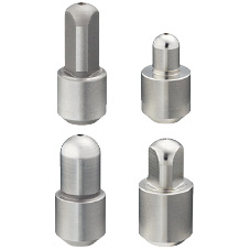 | You can add up to 6 items per a category to the compare list.  | You can add up to 6 items per a category to the compare list.  | You can add up to 6 items per a category to the compare list. 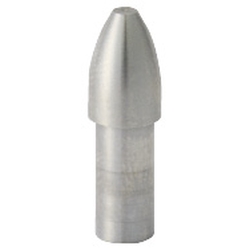 | You can add up to 6 items per a category to the compare list. 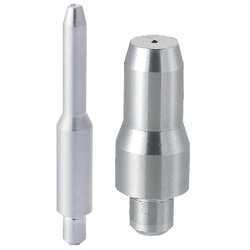 | You can add up to 6 items per a category to the compare list. 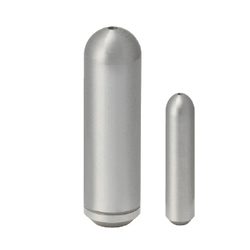 | You can add up to 6 items per a category to the compare list.  | You can add up to 6 items per a category to the compare list.      | You can add up to 6 items per a category to the compare list.  | You can add up to 6 items per a category to the compare list.  | You can add up to 6 items per a category to the compare list. 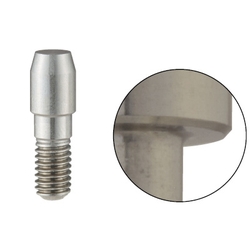 | You can add up to 6 items per a category to the compare list. 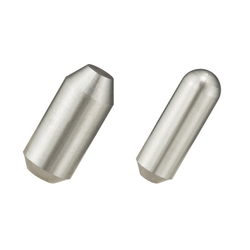 | You can add up to 6 items per a category to the compare list.  | You can add up to 6 items per a category to the compare list. 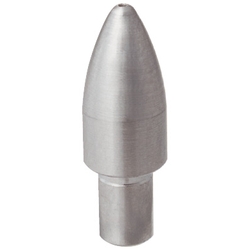 | |
| Brand | MISUMI | MISUMI | MISUMI | MISUMI | MISUMI | MISUMI | MISUMI | MISUMI | MISUMI | MISUMI | MISUMI | MISUMI | MISUMI | MISUMI | MISUMI | MISUMI | MISUMI | MISUMI | MISUMI | MISUMI | MISUMI | MISUMI | MISUMI | MISUMI | MISUMI | MISUMI | MISUMI | MISUMI | MISUMI | MISUMI | MISUMI | MISUMI | MISUMI | MISUMI | MISUMI | MISUMI | MISUMI | MISUMI | MISUMI | MISUMI | MISUMI | MISUMI | MISUMI | MISUMI | MISUMI |
| Product Series | Locating Pins Shouldered, Configurable, Tip Shape Selectable | Locating Pins - High Hardness Stainless Steel, Straight (Tapped) | Locating Pins - High Hardness Stainless Steel Large Head, Tapered (Press Fit) | Locating Pins Large Head, Tapered, Configurable - Taper Angle, Tolerance Selectable, Press Fit | Locating Pins Large Head, Tapered, Screw Mounted, Standard/Compact | Locating Pins - High Hardness Stainless Steel Sphere Large Head (Press Fit) | Locating Pins - Sphere Large/Small Head (Set Screw-Circumference Groove Shape) | Locating Pins - Shouldered (Tapered - Shoulder Thickness Configurable-Press Fit) | Small Diameter Locating Pins - High Hardness Stainless Steel - Small Head | Locating Pins - Large/Small Head, Tapered (Set Screw-Circumference Groove Shape) | Locating Pins - Small Flat Head (D,P Tolerance Selectable-Press Fit) | Locating Pins - Tip Shape Selectable (Tip Length Configurable-Threaded) | Locating Pins - High Hardness Stainless Steel Large Head, Tapered (Threaded) | Locating Pins - High Hardness Stainless Steel, Straight (Press Fit) | Locating Pins - Large Head, Bullet Nose, Compact - Press Fit | ||||||||||||||||||||||||||||||
| CAD |
|
|
|
|
|
|
|
|
|
|
|
|
|
|
|
|
|
|
|
|
|
|
|
|
|
|
|
|
|
|
|
|
|
|
|
|
|
|
|
|
|
|
|
|
|
| From | ₹ 244.82 | ₹ 5,091.10 | |||||||||||||||||||||||||||||||||||||||||||
| Days to Ship | 6 Day(s) | 8 Day(s) or more | 8 Day(s) or more | 6 Day(s) or more | 7 Day(s) or more | 6 Day(s) or more | 6 Day(s) | 6 Day(s) or more | 8 Day(s) or more | 6 Day(s) or more | 6 Day(s) | 6 Day(s) | 6 Day(s) | 8 Day(s) or more | 8 Day(s) or more | 6 Day(s) or more | 8 Day(s) or more | 8 Day(s) or more | 6 Day(s) or more | 6 Day(s) or more | 6 Day(s) | 6 Day(s) or more | 8 Day(s) or more | 8 Day(s) or more | 6 Day(s) or more | 6 Day(s) or more | 6 Day(s) or more | 6 Day(s) or more | 6 Day(s) or more | 8 Day(s) or more | 6 Day(s) | 6 Day(s) or more | 6 Day(s) or more | 7 Day(s) or more | 8 Day(s) or more | 7 Day(s) or more | 6 Day(s) or more | 6 Day(s) | 6 Day(s) or more | 6 Day(s) or more | 6 Day(s) or more | 8 Day(s) or more | 8 Day(s) or more | 6 Day(s) or more | 8 Day(s) or more |
| Basic Shape | Shouldered | Straight / Air Vent | Large Head | Small Head | Shouldered | Straight / Air Vent | Large Head | - | Large Head | Straight / Air Vent | Large Head / Screw Mounted | Large Head | Large Head / Straight / Air Vent | Small Head / Straight / Air Vent | Large Head | Flanged | Large Head | Large Head | Large Head / Small Head | Shouldered | Screw Mounted | Large Head | Flanged | Small Head | Large Head / Small Head | Small Head | Straight / Air Vent | Large Head | Screw Mounted | Straight | Large Head | Small Head | Large Head | Small Head | Large Head | Double-Stepped | Straight / Air Vent | Small Head | Large Head | Large Head | Large Head | Large Head | Straight / Air Vent | Large Head | Large Head |
| Environmentally friendly | - | - | - | - | - | - | - | - | - | - | - | - | - | - | - | - | - | - | - | - | - | - | - | - | - | - | - | - | - | RoHS Compliant (10 Substances) | - | - | - | - | - | - | - | - | - | - | - | - | - | - | - |
| Characteristics/Applications | - | - | - | - | - | - | - | - | - | - | - | - | - | - | - | - | - | - | - | - | - | - | - | - | - | - | - | - | - | Clean Washed | - | - | - | - | - | - | - | - | - | - | - | - | - | - | - |
| Insertion Guide Tip Shape | Round / Diamond | Round | Round / Diamond | Round / Diamond | Round | Round | Round / Diamond | - | Round | Round | Round / Diamond | Round / Diamond | Round / Diamond | Round | Round | Round | Round / Diamond | Round | Round / Diamond | Round / Diamond | Round | Round / Diamond | Round | Round | Round / Diamond | Round | Round | Round | Round | Round | Round / Diamond | Round / Diamond | Round | Round | Round | Round | Round | Round / Diamond | Round | Round | Round | Round / Diamond | Round | Round | Round |
| Insertion Guide Tip Type | Tapered / Taper R / R | Tapered / Spherical | Tapered | Spherical | Tapered | Tapered | Tapered | - | Bullet Nose | Spherical | Tapered | Tapered | Tapered / Taper R / R | Spherical / Flat | Tapered / Taper R / R | Flat | Spherical | Tapered / Spherical / Flat | Spherical | Tapered | Tapered | Spherical | Flat | Tapered / Taper R / Spherical / Flat | Tapered | Flat | Tapered | Flat | Flat | Tapered / Taper R / Spherical / Flat | Spherical | Spherical | Flat | Tapered / Taper R / Spherical / Flat | Round Tapered | Tapered | Spherical | Spherical | Flat | Taper R / R | Flat | Tapered | Tapered / Spherical | Flat | Bullet Nose |
| Insertion Guide Specifications | Not Provided | Not Provided | Not Provided | Not Provided | Not Provided | Not Provided | Not Provided | - | Not Provided | Not Provided | With Screw Mount Hole | With Hex Socket | Not Provided | Not Provided | - | Not Provided | Not Provided | Not Provided | Not Provided | Not Provided | With Screw Mount Hole | Not Provided | Not Provided | Not Provided | Not Provided | Not Provided | Not Provided | Not Provided | With Screw Mount Hole | Not Provided | Not Provided | Not Provided | Not Provided | Not Provided | Not Provided | Not Provided | Not Provided | Not Provided | Not Provided | Not Provided | Not Provided | Not Provided | Not Provided | Not Provided | Not Provided |
| Mounting Side Shape | Straight (Press-Fit) / Tapped / Threaded | Tapped | Straight (Press-Fit) | Tapped | Tapped | Threaded | Straight (Press-Fit) | - | Threaded | Tapped | Straight (Press-Fit) | Threaded | Tapped | Straight (Press-Fit) | - | Straight (Press-Fit) | Straight (Press-Fit) | Straight (Press-Fit) | Circumference Groove | Straight (Press-Fit) | Straight (Press-Fit) | Threaded | Straight (Press-Fit) | Straight (Press-Fit) | Circumference Groove | Straight (Press-Fit) | Tapped | Straight (Press-Fit) | Straight (Press-Fit) | Straight (Press-Fit) | Straight (Press-Fit) | Straight (Press-Fit) | Threaded | Straight (Press-Fit) | Straight (Press-Fit) | Straight (Press-Fit) | Straight (Press-Fit) | Tapped | Tapped | Threaded | Straight (Press-Fit) | Threaded | Straight (Press-Fit) | Tapped | Straight (Press-Fit) |
| Surface Treatment | Not Provided / Black Oxide / Hard Chrome Plating | Not Provided | Not Provided | Not Provided / Hard Chrome Plating | Not Provided / Hard Chrome Plating | Not Provided | Not Provided / Hard Chrome Plating | - | Not Provided / Hard Chrome Plating | Not Provided / Hard Chrome Plating | Not Provided / Hard Chrome Plating | Not Provided / Hard Chrome Plating | Not Provided / Black Oxide / Hard Chrome Plating | Not Provided | Not Provided | Not Provided | Not Provided | Not Provided | Not Provided / Hard Chrome Plating | Not Provided / Hard Chrome Plating | Not Provided / Black Oxide / Hard Chrome Plating | Not Provided / Hard Chrome Plating / Buffed / Hard Chrome Plating + Buffed | Black Oxide | Not Provided | Not Provided / Hard Chrome Plating | Not Provided / Hard Chrome Plating | Not Provided / Hard Chrome Plating | Not Provided / Electroless Nickel Plating | Not Provided / Electroless Nickel Plating | Not Provided | Not Provided / Hard Chrome Plating / Buffed / Hard Chrome Plating + Buffed | Not Provided / Hard Chrome Plating / Buffed / Hard Chrome Plating + Buffed | Not Provided / Hard Chrome Plating | Not Provided | Not Provided | Not Provided / Hard Chrome Plating | Not Provided / Hard Chrome Plating | Not Provided / Hard Chrome Plating | Not Provided / Hard Chrome Plating | Not Provided / Black Oxide / Hard Chrome Plating | Not Provided / Black Oxide / Electroless Nickel Plating | Not Provided | Not Provided | Not Provided | Not Provided / Hard Chrome Plating |
| Heat Treatment | Not Provided / Directly Quenching | Not Provided | Not Provided | Not Provided / Directly Quenching | Not Provided / Directly Quenching | Not Provided / Directly Quenching | Not Provided / Directly Quenching | - | Not Provided / Directly Quenching | Not Provided / Directly Quenching | Not Provided / Directly Quenching | Not Provided / Directly Quenching | Not Provided / Directly Quenching | Not Provided | Not Provided | Not Provided | Not Provided | Not Provided | Not Provided / Directly Quenching | Not Provided / Directly Quenching | Not Provided / Directly Quenching | Not Provided / Directly Quenching | Not Provided | Not Provided | Not Provided / Directly Quenching | Not Provided / Directly Quenching | Not Provided / Directly Quenching | Not Provided | Not Provided | Not Provided | Not Provided / Directly Quenching | Not Provided / Directly Quenching | Not Provided / Directly Quenching | Not Provided / Directly Quenching | Not Provided / Directly Quenching | Not Provided / Directly Quenching | Not Provided / Directly Quenching | Not Provided / Directly Quenching | Not Provided / Directly Quenching | Not Provided / Directly Quenching | Not Provided | Not Provided | Not Provided | Not Provided / Carburized | Not Provided / Directly Quenching |
| Material | - | Stainless Steel | Stainless Steel | Steel / Stainless Steel | Steel / Stainless Steel | Steel / Stainless Steel | - | Steel | Steel / Stainless Steel | Steel / Stainless Steel | - | - | - | Resin | Stainless Steel | Steel | Stainless Steel | Resin | Steel / Stainless Steel | Steel / Stainless Steel | - | Steel / Stainless Steel | Steel | Stainless Steel | Steel / Stainless Steel | Steel / Stainless Steel | Steel / Stainless Steel | Steel / Stainless Steel | Steel / Stainless Steel | Stainless Steel | - | Steel / Stainless Steel | Steel / Stainless Steel | Steel / Stainless Steel | Steel / Stainless Steel | Steel / Stainless Steel | Steel / Stainless Steel | - | Steel / Stainless Steel | Steel / Stainless Steel | Steel / Stainless Steel | Stainless Steel | Stainless Steel | Steel / Stainless Steel | Steel / Stainless Steel |
| Insertion Guide Outer Dia. D1(mm) | 2.5 ~ 22 | - | 2.5 ~ 18 | 3 ~ 20 | 4 ~ 11 | 5 ~ 12 | 1 ~ 30 | 8.2 ~ 12.2 | 3.5 ~ 15 | 5 ~ 10 | 11 ~ 30 | 5.5 ~ 30 | 6 ~ 35 | 1 ~ 2.9 | 3.5 ~ 17.5 | 20 | 2.5 ~ 17.5 | 1.5 ~ 15 | 2 ~ 30 | 1 ~ 20 | 11 ~ 25 | 3 ~ 30 | - | 0.5 ~ 2.99 | 2 ~ 30 | 1 ~ 20 | 5 ~ 10 | 6 ~ 32 | - | 1 ~ 3 | 2.5 ~ 30 | 1 ~ 20 | 3 ~ 30 | 0.5 ~ 2.99 | 1.5 ~ 15 | 2 ~ 30 | 1 ~ 10 | 3 ~ 20 | 5 ~ 30 | 4 ~ 30 | 3 ~ 40 | 3.5 ~ 17.5 | - | 10 ~ 30 | 3 ~ 15 |
| Insertion Guide Tolerance | 0/-0.02 | g6 ~ h7 | 0/-0.01 | 0/-0.01 | 0/-0.01 | g6 | - | - | 0/-0.01 | g6 ~ h7 | 0/-0.02 | 0/-0.02 | 0/-0.02 | g6 ~ h7 | - | - | 0/-0.01 | 0/-0.05 | 0/-0.01 | 0/-0.01 | 0/-0.02 | 0/-0.01 | h7 | 0/-0.01 | 0/-0.01 | 0/-0.01 ~ h7 | g6 ~ h7 | g6 | g6 | 0/-0.01 ~ 0.005/0 | 0/-0.02 | 0/-0.01 | h6 | 0/-0.01 ~ 0.005/0 | 0/-0.01 | 0/-0.01 | g6 ~ h7 | 0/-0.02 | h6 | 0/-0.01 | g6 | 0/-0.01 | g6 ~ h7 | 0/-0.01 | 0/-0.01 |
| Mounting Side Outer Dia. d(mm) | 2 ~ 20 | 6 ~ 10 | 2 ~ 12 | 5 ~ 20T | 6 ~ 10 | 3 ~ 6 | 1 ~ 20 | 15 ~ 19 | 3 ~ 10 | 5 ~ 10 | 10 ~ 20 | 3 ~ 20 | 6 ~ 20T | - | - | - | 2 ~ 12 | 1 ~ 10 | 6 ~ 20 | 2 ~ 20 | - | 3 ~ 20 | - | 0.51 ~ 3 | 6 ~ 20 | 2 ~ 20 | 5 ~ 10 | 5 ~ 12 | 10 ~ 32 | 0.5 ~ 3 | 2 ~ 20 | 2 ~ 20 | 3 ~ 20 | 0.51 ~ 3 | 1 ~ 10 | 2 ~ 20 | 1 ~ 10 | 5 ~ 20T | 5 ~ 20T | 3 ~ 20 | - | 3 ~ 12 | 3 ~ 10 | 6 ~ 20 | 2 ~ 10 |
| Mounting Side Tolerance | g6 ~ m6 | g6 ~ h7 | g6 ~ h7 | g6 | g6 | g6 | - | - | g6 | g6 ~ h7 | - | - | - | g6 ~ h7 | - | - | g6 ~ h7 | m6 | g6 | m6 | 0/-0.02 | g6 | h7 | 0/-0.01 | g6 | 0/-0.005 ~ h7 | g6 ~ h7 | m6 | g6 | 0/-0.01 ~ 0.005/0 | - | m6 ~ p6 | g6 | 0/-0.01 ~ 0.005/0 | 0.012/0.007 | m6 ~ p6 | g6 ~ h7 | - | g6 | g6 | g6 | g6 ~ h7 | g6 ~ h7 | g6 | m6 ~ p6 |
| Cleaning Method | - | - | - | - | - | - | - | - | - | - | - | - | - | - | - | - | - | - | - | - | - | - | - | - | - | - | - | - | - | Degreasing / Precision Cleaning / Electrolytic Polishing + Precision Cleaning | - | - | - | - | - | - | - | - | - | - | - | - | - | - | - |
Loading...
Configure
Specification/Dimensions
-
Environmentally friendly
-
Characteristics/Applications
-
Insertion Guide Tip Shape
-
Insertion Guide Tip Type
-
Insertion Guide Specifications
-
Mounting Side Shape
-
Surface Treatment
-
Heat Treatment
- Not Provided
- Carburized
- Directly Quenching
-
Material
-
Insertion Guide Outer Dia. D1(mm)
-
Insertion Guide Tolerance
-
Mounting Side Outer Dia. d(mm)
-
Mounting Side Tolerance
-
Cleaning Method




Related Categories to Locating Pins
FAQ Locating Pins
- Question: What are locating pins?
- Answer: Locating pins are essential components used in factory automation to achieve precise alignment and positioning of workpieces during assembly and machining processes. These pins are inserted into precision holes or bushings to establish accurate alignment and prevent movement or misalignment of parts.
- Question: What are the main benefits of using locating pins?
- Answer: The use of locating pins offers several benefits in factory automation. They ensure accurate and repeatable positioning, improving the overall quality and consistency of assembled products. Locating pins also enhance productivity by reducing assembly time and minimizing errors. They provide stability and prevent movement or shifting of components, resulting in better alignment and fit. Additionally, locating pins help to maintain proper tolerances and ensure efficient machining processes.
- Question: What are the different types of locating pins?
- Answer: Locating pins come in various types, including:
Dowel Pins: Cylindrical pins with a tight tolerance fit used for precise alignment.
Tapered Pins: Conical pins that provide self-centering capability.
Shoulder Pins: Featuring a step or shoulder to provide accurate positioning at a specific depth.
Spring-Loaded Pins: Pins with spring mechanisms for automatic retraction and engagement.
Floating Pins: Pins designed to allow slight movement for accommodating manufacturing tolerances. - Question: What materials are locating pins made from?
- Answer: Locating pins are typically made from durable and corrosion-resistant materials such as hardened steel, stainless steel, or tungsten carbide. The choice of material depends on the specific application requirements, including load capacity, environmental conditions, and desired longevity.
- Question: How do I install and use locating pins effectively?
- Answer: To install locating pins, align the pin with the pre-drilled hole or bushing and gently insert it until it is securely in place. Ensure that the pin fits snugly and does not protrude excessively. When using locating pins, it is essential to follow the design specifications and guidelines provided by the manufacturer. Proper maintenance, including periodic cleaning and lubrication, can also help ensure optimal performance and longevity of locating pins.
Payment Method
- Credit Card
-


- Debit Cart
-


- Net Banking
-


- UPI
-


- Cheque on delivery
-

- Online payment
-


Social Media


MISUMI India Contact
Copyright © MISUMI Corporation All Rights Reserved.


How can we improve?
How can we improve?
Thank you for your time.
Your feedback is essential for our continuous improvement
Privacy Policy
Thank you for your cooperation.
Thank you for your time.
Your feedback is essential for our continuous improvement
Please use the inquiry form.
Privacy Policy