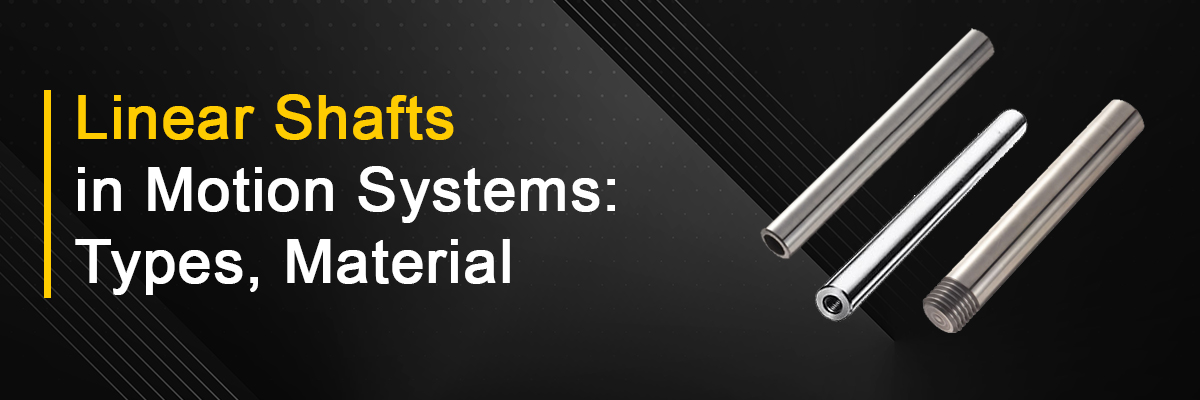
Spline Shafts: Definition, Types, Materials, and Specifications
Publish Date: 6 Oct 2025
Spline shafts are foundational components in mechanical engineering, serving as highly efficient mechanisms for transmitting torque while often facilitating axial movement (sliding). They are the workhorses in systems requiring both robust power transfer and dynamic positioning.
Definition and Fundamental Function
A spline shaft is a cylindrical component featuring a series of precisely machined, longitudinal ridges—known as splines—along its exterior surface. These splines are designed to engage seamlessly with corresponding grooves in a mating component (like a gear, clutch, or coupling), creating an interlocking, positive-drive connection.
Key Advantages:
- High torque transmission efficiency
- Reduced backlash
- Enhanced load-bearing capacity
- Ability to support axial movement
Types of Spline Shafts
Spline shafts are available in various designs to suit specific applications.
| Type | Description |
|---|---|
| Solid | A fully solid shaft for robust torque transmission and durability. |
| Hollow | Lightweight with reduced material usage, ideal for weight-sensitive applications. |
| Polygonal | Non-circular spline geometry offering high strength and compact design. |
End Shapes
Spline shafts can be customized with different end shapes on both sides to match integration requirements.
| End Shape Option | Description |
|---|---|
| Standard | Straight end, general-purpose use. |
| Tapped | Internal thread for fitting fasteners. |
| Stepped | Reduced diameter section for positioning or fitting. |
| Stepped and Tapped | Combination of stepped geometry and internal threading. |
| Stepped and Threaded | Stepped design with external threads. |
Nut Types
Spline shafts often come with specialized nuts that support movement and alignment.
| Nut Type | Description |
|---|---|
| Key Provided Type | Equipped with a key to prevent rotation and ensure precise linear movement. |
| Flanged Type | Features a flange for better mounting stability and load distribution. |
Material Selection and Characteristics
The material dictates the shaft's strength, fatigue life, and resistance to environmental factors like corrosion and heat.
| Material | Primary Characteristics & Treatment | Ideal Application Environment |
|---|---|---|
| SCM415 Equivalent | Low-alloy steel, often carburized for a hard surface and tough core. High strength and good wear resistance. | Heavy-duty, general machinery, and automotive applications. |
| SUJ2 / SUJ2 Equivalent | High-carbon chromium bearing steel, known for its extreme hardness and uniform quality. | High-precision applications with rolling contact, excellent durability against wear. |
| SUS440C Equivalent | Martensitic Stainless Steel. Best combination of high hardness (can be heat-treated) and corrosion resistance. | Wet environments, food processing, or precision instruments exposed to moisture. |
| SUS304 | Austenitic Stainless Steel. Excellent corrosion resistance, good weldability, and non-magnetic. Lower hardness than 440C. | Chemical processing, mild corrosive environments, aesthetic/sanitary applications. |
Standard Dimensions and Specifications
Spline shafts are available in different dimensional ranges to cater to various requirements.
| Specification | Range/Options |
|---|---|
| Outer Diameter | 6.0 mm to 30.8 mm |
| Nut Length | Standard, Long |
Spline shafts are highly reliable components that ensure precise torque transfer with axial flexibility. With customization in geometry, end shape, material, and nut configuration, manufacturers can adapt spline shafts to diverse mechanical systems. MISUMI provides extensive options, allowing engineers to select and configure spline shafts for maximum performance in industrial and automotive applications.


