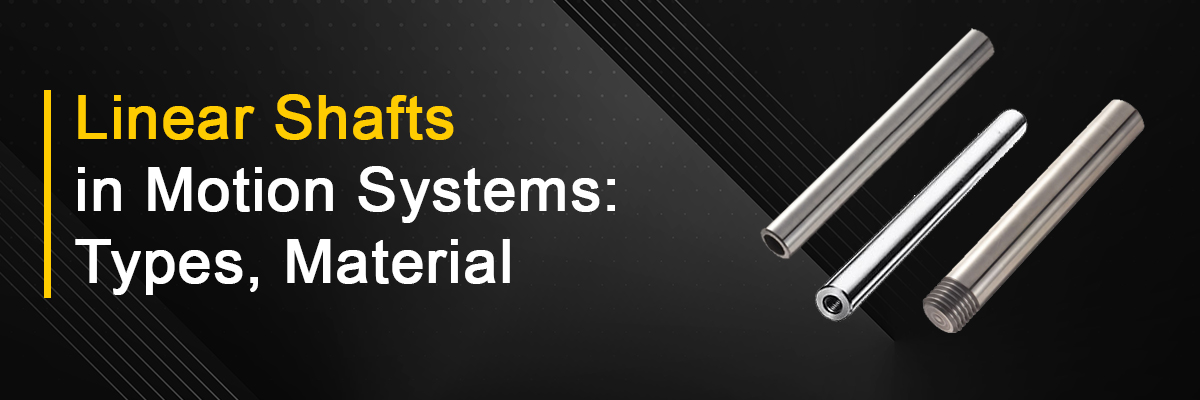
Role of Linear Motion Components in Robotics and CNC Machines
Publish Date: 6 Oct 2025
Linear motion components are fundamental to the operation of robotics and CNC (Computer Numerical Control) machines, enabling precise, controlled, and repeatable movement that is essential for modern automated manufacturing and robotic applications.
Precision that Meets Tomorrow’s Challenges
Robotics and CNC machines demand ultra-precise movements—often down to microns—to create complex parts and perform sensitive tasks. Linear guides, ball screws, and linear actuators allow machines to move with exceptional repeatability and minimal backlash. These components minimize friction and wear, ensuring that every motion is precise, predictable, and consistent throughout long operational cycles.
Sturdy Support for Complex Loads
Whether lifting heavy tooling or making delicate manipulations, linear motion elements provide the necessary rigidity and load capacity. Components like cross roller guides and high-quality linear bearings absorb dynamic forces and vibrations, maintaining stability and preventing unwanted deviations during operation. This rigidity safeguards the accuracy critical in sectors like aerospace, automotive, and electronics manufacturing.
Speed and Grace Combined
High-speed manufacturing requires linear motion components capable of smooth acceleration and deceleration. Ball screws and linear motors excel here, providing fast, controlled movements that reduce cycle times without sacrificing precision. This results in increased throughput and improved surface finishes, essential for competitive production lines.
Modular and Customizable Systems
The use of standardized linear components allows manufacturers to design modular and scalable automation systems. Robotics and CNC machines can be quickly customized or upgraded by swapping or adding specific parts like actuators or guide rails, enhancing flexibility without extensive redesigns.
Built to Endure and Perform
Designed with advanced materials and surface treatments, linear motion components offer superior durability in harsh factory environments—resisting dust, coolant, high temperatures, and continuous operation stresses. Sealed bearings, corrosion-resistant coatings, and specialized lubricants all contribute to longer operational life and reduced maintenance.
Seamless Integration with Intelligent Control
Modern linear motion products often incorporate or work hand-in-hand with position sensors, encoders, and feedback systems, enabling closed-loop control. This integration is the backbone of adaptive, responsive robotics and CNC systems capable of real-time adjustments, predictive maintenance, and fault detection.
Applications in Robotics
- Multi-axis motion for articulated and SCARA robotic arms
- Smooth, reliable linear travel in pick-and-place, welding, and assembly operations
- Enabling precision in medical, automotive, and electronics production environments
Applications in CNC Machining
- Precise tool positioning for milling, drilling, and grinding
- Handling of complex geometries with multi-axis systems
- Ensuring repeatability and quality in mass production
Conclusion: The Pillars of Precision Motion
Linear motion components form the mechanical foundation of robotics and CNC machines, delivering the precision, speed, and resilience that modern automated manufacturing demands. As technology advances, these components continue to evolve—becoming smarter, more compact, and more efficient—sustaining the industry’s drive toward greater productivity and innovation.


