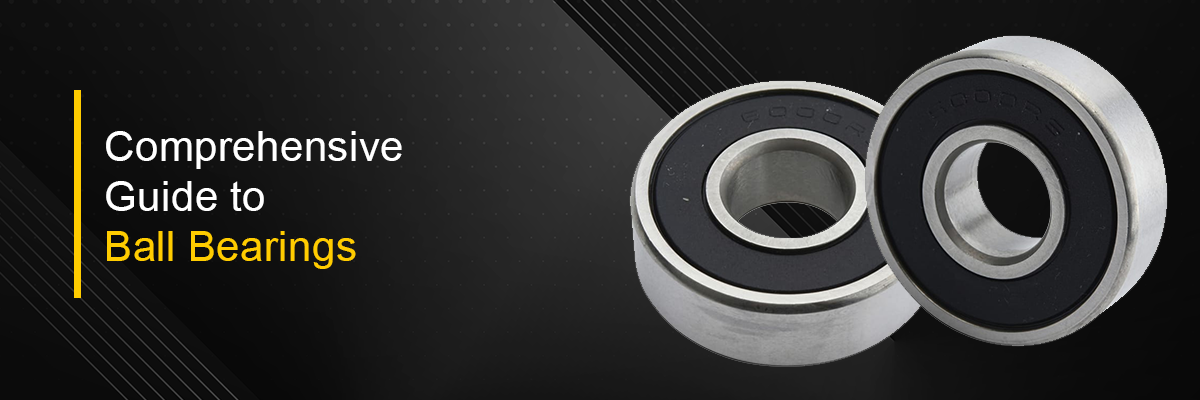
Comprehensive Guide to Ball Bearings
Publish Date: 26 Sep 2025
Ball bearings are fundamental components in mechanical systems, designed to reduce friction between moving parts while supporting radial and axial loads. They play a crucial role in ensuring the smooth operation of various industrial, automotive, aerospace, and household applications. Due to their versatility and reliability, ball bearings are widely used across multiple industries to enhance performance and longevity.
Among the different types of ball bearings, rubber-sealed ball bearings offer superior protection against contaminants such as dust, dirt, and moisture, ensuring a longer lifespan and reliable performance in harsh environments. However, before delving into rubber-sealed bearings specifically, it's essential to understand ball bearings, their construction, and their significance in different applications.
Understanding Ball Bearings
1. How Ball Bearings Work
Ball bearings are designed with a series of rolling balls placed between an inner and outer ring, allowing rotation with minimal friction. The balls are evenly spaced using a cage, which helps distribute the load evenly while maintaining smooth movement. The reduction in friction helps improve efficiency, decreases wear and tear, and enhances the overall durability of machinery.
2. Types of Ball Bearings
- Ball Bearings: The most common type, used in high-speed applications and capable of handling radial load.
- Angular Contact Ball Bearings: Designed to handle combined radial and axial loads at an angle, making them suitable for high-precision applications.
- Self-Aligning Ball Bearings: Allow slight misalignments in the shaft and housing, used in applications where shaft deflection may occur.
- Thrust Ball Bearings: Handle axial loads in one direction and are typically used in low-speed applications.
Key Features of Ball Bearings
1. Material and Construction
- Made from SUJ2 (high-carbon chromium bearing steel), ensuring superior strength, wear resistance, and durability.
- Precision-manufactured to comply with JIS Class 0 standards for consistent performance.
- Deep groove design enables efficient handling of radial load.
2. Dimensions and Precision
- Inner Diameter Range: 10mm to 50mm
- Outer Diameter Range: 19mm to 110mm
- Width Range: 5mm to 27mm
- Bearing Type: rubber-sealed (DDU).
3. Performance and Efficiency
- High surface hardness and wear resistance due to premium material selection.
- Low friction torque ensures minimal energy loss.
- Smooth and silent operation, suitable for precision applications.
Applications of Ball Bearings
1. Industrial Machinery
- Essential for motors, conveyor belts, compressors, and mechanical tools.
- Ensures smooth rotation and minimizes mechanical failures.
2. Agricultural Equipment
- Used in tractors, harvesters, irrigation systems, and soil preparation tools.
- Withstands exposure to dust, soil, and moisture, ensuring durability.
Ball Bearings with Rubber Seals
1. Protective Sealing
- Contact Rubber Seal (DDU): Offers maximum protection against contaminants while ensuring tight enclosure.
- Non-Contact Rubber Seal (LLU): Reduces friction while still providing adequate sealing against dust and moisture.
2. Pre-Lubrication
- Comes pre-filled with high-quality grease for long-term smooth performance.
- Reduces the need for frequent maintenance, making it ideal for applications where manual lubrication is challenging.
3. Applications in Harsh Environments
- Ideal for use in areas exposed to dust, moisture, and debris, such as mining equipment, construction machinery, and offshore applications.
- Commonly found in industrial and agricultural equipment, where enhanced protection is required.
Advantages of Ball Bearings
1. Reduced Friction and Smooth Operation
- Engineered with low-friction grease, ensuring efficient movement with minimal resistance.
- Reduces wear and tear, improving longevity and reliability.
2. High Load Capacity
- Comes pre-filled with high-quality grease for long-term smooth performance.
- Reduces the need for frequent maintenance, making it ideal for applications where manual lubrication is challenging.
3. Extended Service Life
- The combination of premium materials, pre-lubrication, and effective sealing enhances the service life.
Installation and Maintenance Tips
1. Proper Installation Methods
- Ensure alignment of shaft and housing to prevent excessive stress.
- Avoid contamination by keeping the bearing and surrounding areas clean.
2. Recommended Lubrication Practices
- Rubber-sealed bearings come pre-lubricated, but periodic inspection is recommended.
3. Regular Inspection and Replacement
- Monitor for signs of wear, noise, or overheating.
- Replace bearings before failure to prevent damage to machinery.
4. Proper Handling and Storage
- Store bearings in a clean, dry environment to prevent rust or contamination.
- Avoid dropping or mishandling bearings, as this can affect their performance.
Comparison: Rubber-Sealed vs. Open Ball Bearings
| Feature | Rubber-Sealed Bearings | Open Bearings |
|---|---|---|
| Contamination Protection | High | Low |
| Lubrication Retention | Excellent | Requires frequent lubrication |
| Maintenance Requirement | Low | High |
| Speed Capability | Slightly lower | Higher |
Conclusion
Ball bearings are vital components in numerous industries, playing a key role in ensuring efficiency and durability in machinery. Rubber-sealed ball bearings provide additional protection against contaminants, making them ideal for harsh environments where longevity is critical.
MISUMI India offers high-quality ball bearings tailored to meet diverse industrial needs, ensuring superior performance and reliability. Selecting the right ball bearing for specific applications is essential in maximizing operational efficiency and reducing downtime, making them indispensable for engineers and manufacturers worldwide.


