(!)NOTE : Windows 7 users won’t be able to use some latest features of eCatalog/WOS since Microsoft is ending support for Windows 7 on 14 Jan, 2020. Please upgrade your system for uninterrupted services.

- Notice of End of Sales for Economy Series Pneumatic Equipment Category. More information.
Heat Insulating Plates(Length A:3,000)
When selecting a Heat insulating plate, it is crucial to consider factors, including operating temperature, size (which can be customized), plate thickness, materials (eg., Phenolic, Silicone, Epoxy), and Shape (e.g., square, circle, and with various hole configurations). These considerations are crucial for ensuring the production of high-quality products. We highly recommend reputable brands such as MISUMI and RS Pro, as well as cost-effective options from MISUMI ECONOMY.
Take advantage of the convenience of FREE SHIPPING and NO MINIMUM ORDER on Heat insulating plates. Should you have any doubts or require assistance in choosing the right product, our experts are readily available to provide advice and guidance.
Brand |
|
|---|---|
| CAD |
|
| Days to Ship |
|
3 items
- Sort By
-
You can add up to 6 items per a category to the compare list.
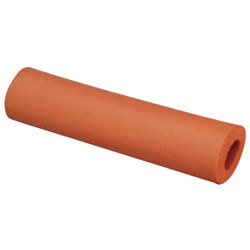
THREE HIGH
Insulation plate with superior insulation and heat retention properties.
[Features]
· Although it depends on the degree of compression, it can generally be used from -60 to 200°C.
· Can be cut freely.
· Tube-type insulation material. Can be fit easily onto narrow piping and tubes.
[Applications]
· As an accessory to a heater.
· Heat retention, insulation, freeze prevention, heat-resistant cushion.
· Various types of gasket/packing, electronic parts, electrical parts, automobile parts, piping lines.Recommended Operating Temperature(°C) Plate Thickness T(mm) Width B(mm) Length A(mm) Application - - - 3,000 Standard / Very High Temperature Resistant / Heat Insulated From: ₹ 12,996.18 Days to Ship: 5 Day(s) or more  5 Day(s) or more
-
You can add up to 6 items per a category to the compare list.
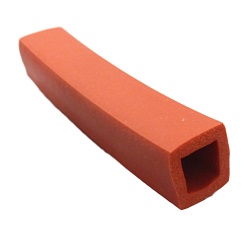
THREE HIGH
Insulation plate with superior insulation and heat retention properties.
[Features]
· Although it depends on the degree of compression, it can generally be used from -60 to 200°C.
· Can be cut freely.
· Tube-type insulation material. Can be fit easily onto narrow piping and tubes.
[Applications]
· As an accessory to a heater.
· Heat retention, insulation, freeze prevention, heat-resistant cushion.
· Various types of gasket/packing, electronic parts, electrical parts, automobile parts, piping lines.Recommended Operating Temperature(°C) Plate Thickness T(mm) Width B(mm) Length A(mm) Application - - - 3,000 Standard / Very High Temperature Resistant / Heat Insulated From: ₹ 3,648.85 Days to Ship: 5 Day(s) or more
5 Day(s) or more
-
You can add up to 6 items per a category to the compare list.
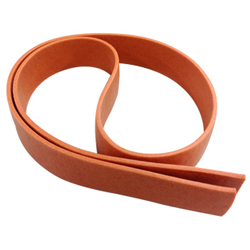
THREE HIGH
Insulation plate with superior insulation and heat retention properties.
[Features]
· Although it depends on the degree of compression, it can generally be used from -60 to 200°C.
· Can be cut freely.
· Belt-shaped insulating material. Can easily be wrapped around plumbing with complicated shapes.
[Applications]
· As an accessory to a heater.
· Heat retention, insulation, freeze prevention, heat-resistant cushion.
· Various types of gasket/packing, electronic parts, electrical parts, automobile parts, piping lines.Recommended Operating Temperature(°C) Plate Thickness T(mm) Width B(mm) Length A(mm) Application - - - 3,000 Standard / Very High Temperature Resistant / Heat Insulated From: ₹ 4,514.91 Days to Ship: 5 Day(s) or more
5 Day(s) or more
| Brand |
|---|
| Product Series |
| From |
| Days to Ship |
| Recommended Operating Temperature(°C) |
| Plate Thickness T(mm) |
| Width B(mm) |
| Length A(mm) |
| Application |
You can add up to 6 items per a category to the compare list. 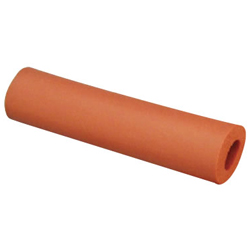 | You can add up to 6 items per a category to the compare list. 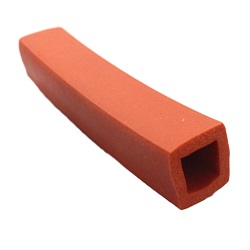 | You can add up to 6 items per a category to the compare list. 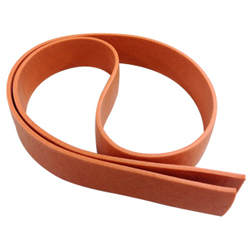 | |
| Brand | THREE HIGH | THREE HIGH | THREE HIGH |
| Product Series | |||
| From | ₹ 12,996.18 | ₹ 3,648.85 | ₹ 4,514.91 |
| Days to Ship | 5 Day(s) or more | 5 Day(s) or more | 5 Day(s) or more |
| Recommended Operating Temperature(°C) | - | - | - |
| Plate Thickness T(mm) | - | - | - |
| Width B(mm) | - | - | - |
| Length A(mm) | 3,000 | 3,000 | 3,000 |
| Application | Standard / Very High Temperature Resistant / Heat Insulated | Standard / Very High Temperature Resistant / Heat Insulated | Standard / Very High Temperature Resistant / Heat Insulated |
Loading...
Configure
Specification/Dimensions
-
Recommended Operating Temperature(°C)
-
Plate Thickness T(mm)
-
Width B(mm)
-
Length A(mm)
-
Application
Related Categories to Heat Insulating Plates
FAQ Heat insulating plates
- Question: What is Heat Insulating Plates?
- Answer: Heat Insulating Plates are designed to prevent heat transfer and are used in various applications across diverse industries such as automation systems, manufacturing industries, food and pharmaceutical industries, and electronics industries.
- Question: Can heat insulating materials block heat 100%
- Answer: There is not any material that be able to block heat 100%
The purpose of this product is to reduce transmission and can reduce even more heat transmission by stacking multiple plates. Please see more details at thermal properties. - Question: Can I drill or milling on Heat insulating plates?
- Answer: Although it can be machining, but please be noted that this material is fragile and difficult to processed compared to other metal plates. So, please be careful as following:
• Please apply low speed, rpm, and feed rate.
• Make sure to machine with high hardness tools (K10) General tools may worn-out fast. It is recommended to use diamond-coating tools for machining.
• When drilling a through hole, place a backing plate under the heat insulating plate and drilling penetrate through the backing plate. (Because the material is a laminated board, so it may crack if opened in steps.) - Question: Is it compatible for cleanroom?
- Answer: It is not recommended to use in cleanroom.
Because it made out of fiber glass, small particle might be generated. - Question: Do the Heat insulating plates applicable to food storage equipment?
- Answer: It is not applicable to use directly to contact with food since it contains fiber glass.
- Question: What kind of material is High Temperature Insulator Plates −High Insulating Grade · Low Thermal Conductivity Grade−?
- Answer: It looks like a hard gypsum board and feels like ceramics.
Please use a gypsum board cutting machine and beware of dust scattering when cutting. - Question: Material of Heat Insulating Plates?
- Answer: Heat insulating plates, also known as thermal insulation plates, are made from a variety of materials designed to reduce the transfer of heat between two surfaces or areas. The choice of material for heat insulating plates depends on the specific application, the temperature range, and the desired thermal insulation properties. Some common materials used for heat insulating plates include:
Fiberglass: It is lightweight and offers excellent thermal insulation properties. Fiberglass insulation is often used in industrial applications, including furnaces and industrial equipment.
Mineral Wool: It is made from spun or felted mineral fibers, typically from rock or slag. Mineral wool offers good insulation properties and is resistant to high temperatures.
Cellular Glass: Cellular glass is a rigid insulation material made from glass, typically in the form of a closed-cell foam. It is used in high-temperature applications.
Ceramic Fiber: Ceramic fiber materials are designed for high-temperature insulation applications. Often used in industries like metallurgy, foundries, and glass production.
Polyurethane Foam: Polyurethane foam insulation can be used as heat insulating plates in applications where lower temperatures are involved. It provides good insulation and is often used in construction and refrigeration.
- Question: I want to attach Heat insulating plates to the workpiece in an ambient temperature and environment.
Will there be any deform such as softening or swelling? - Answer: Almost no deformation.
- Question: The sides of the Heat insulating plate will be tattered and scraped off during use. Are there any products that durable against scraped?
- Answer: Heat insulating plates are designed to be contacted and rubbed with work, so they will be scraped off. However, if there is no contact or rubbing against the work, it will not be tattered or fall out.
Payment Method
- Credit Card
-


- Debit Cart
-


- Net Banking
-


- UPI
-


- Cheque on delivery
-

- Online payment
-


Social Media


MISUMI India Contact
Copyright © MISUMI Corporation All Rights Reserved.


How can we improve?
How can we improve?
Thank you for your time.
Your feedback is essential for our continuous improvement
Privacy Policy
Thank you for your cooperation.
Thank you for your time.
Your feedback is essential for our continuous improvement
Please use the inquiry form.
Privacy Policy