(!)NOTE : Windows 7 users won’t be able to use some latest features of eCatalog/WOS since Microsoft is ending support for Windows 7 on 14 Jan, 2020. Please upgrade your system for uninterrupted services.

- Scheduled Maintenance Notice: This site will be unavailable due to scheduled maintenance from 6:30 21/4/2024 to 3:30 (IST) 22/4/2024. We apologize for the inconvenience.
- Due to an increase in demand, the lead time of some of the electrical items from our eCatalogue has increased abnormally and may cause delays in delivery or order suspension. We apologize for the inconvenience and appreciate your kind understanding. Once the supply will get normalized, we will update the same.
Adjustment Screws
Brand |
|
|---|---|
| CAD |
|
| Days to Ship |
|
13 items
- Sort By
-
Recommended
You can add up to 6 items per a category to the compare list.
 MiSUMi Economy
Days to Ship: Same day or more  Same day or more
-
Recommended
You can add up to 6 items per a category to the compare list.
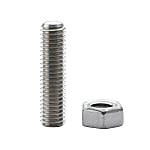
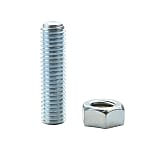
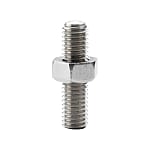
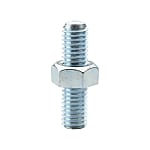 MiSUMi Economy
Days to Ship: Same day or more
Same day or more
-
You can add up to 6 items per a category to the compare list.
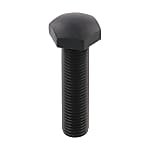
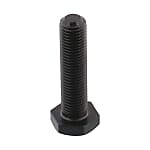
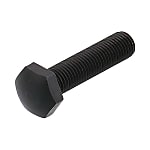
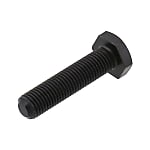
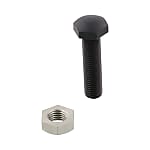
Locating Bolts - Round Head - Hex Socket Round Head
MISUMI
"[Features] Fine adjustment is available for the locating operation. Have the tip baked and thus, are abrasion-resistant."
- Volume Discount
From: ₹ 239.00 Days to Ship: Same day or more
Same day or more
-
You can add up to 6 items per a category to the compare list.
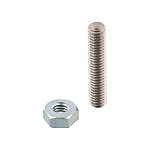
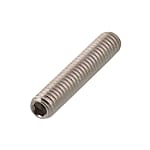
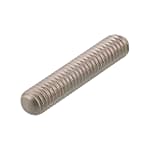
Adjusting Stopper Screws-Hex Socket
MISUMI
[Quantity sliding discount available] You can get up to 15% off by purchasing a large quantity.
- Volume Discount
Days to Ship: Same day or more
Same day or more
-
You can add up to 6 items per a category to the compare list.
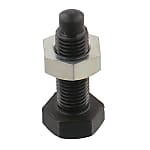
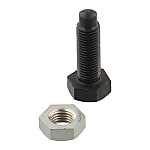
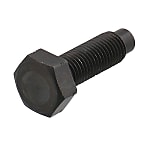
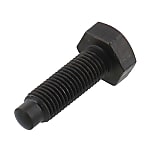
MISUMI
"[Features] Fine adjustment is available for the locating operation. Have the tip baked and thus, are abrasion-resistant."
- Volume Discount
From: ₹ 120.00 Days to Ship: Same day or more
Same day or more
-
You can add up to 6 items per a category to the compare list.
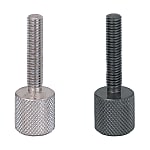
Adjusting Stopper Screws - Knurled Knobs
MISUMI
"[Features] Fine adjustment is available for the locating operation. Have the tip baked and thus, are abrasion-resistant."
- Volume Discount
From: ₹ 396.42 Days to Ship: 6 Day(s) or more
6 Day(s) or more
-
You can add up to 6 items per a category to the compare list.
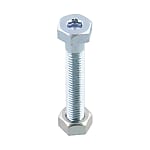
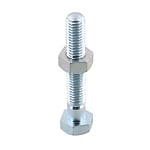
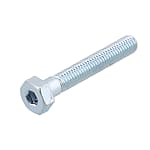
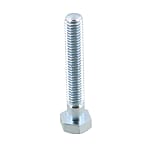
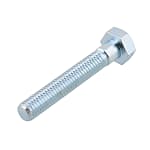
Adjusting Stopper Screws - Hex Head
MISUMI
"[Features] Fine adjustment is available for the locating operation. Have the tip baked and thus, are abrasion-resistant."
- Volume Discount
From: ₹ 182.00 Days to Ship: Same day or more
Same day or more
-
You can add up to 6 items per a category to the compare list.
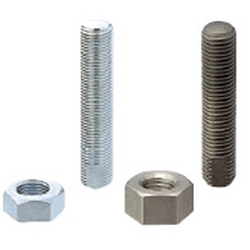
Adjusting Stopper Screws - Wrench Flats
MISUMI
"[Features] Fine adjustment is available for the locating operation. Have the tip baked and thus, are abrasion-resistant."
- Volume Discount
From: ₹ 203.57 Days to Ship: 6 Day(s) or more
6 Day(s) or more
-
You can add up to 6 items per a category to the compare list.
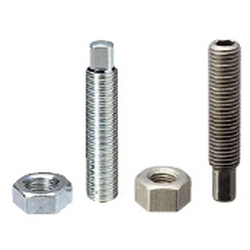
Adjusting Stopper Screws - Wrench Flats with Hex Socket
MISUMI
"[Features] Fine adjustment is available for the locating operation. Have the tip baked and thus, are abrasion-resistant."
- Volume Discount
From: ₹ 289.28 Days to Ship: Same day or more
Same day or more
-
You can add up to 6 items per a category to the compare list.
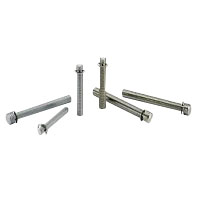
Screw Adapter (Thread Diameter Changing Type)_SAD-SD
NABEYA BI-TECH
[Features]
· Combine with lever / knob etc. female thread products, and use with non-standard diameter thread lever / knob etc.
· For screw fixing use pin stop or`anaerobic adhesive.
· A pin stop is recommended where lever / knob combination tightening repeated.
· With retaining ring, thread length can be accurately set.
· Use screw adapter and lever / knob combination supplied to order.
· Custom screw length can be ordered.
· Each variation of screw adapter is available.From: ₹ 432.80 Days to Ship: 5 Day(s) or more
5 Day(s) or more
-
You can add up to 6 items per a category to the compare list.
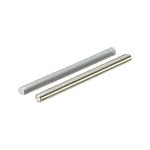
Screw Adapter (Long Thread Type) SAD-FT
NABEYA BI-TECH
Combine with lever / knob etc. female thread products, and use as long thread lever / knobs etc.
From: ₹ 168.93 Days to Ship: 5 Day(s) or more
5 Day(s) or more
-
You can add up to 6 items per a category to the compare list.
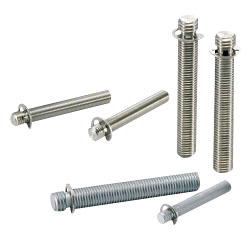
Screw Adapter (Fine Thread Type)_SAD-RF
NABEYA BI-TECH
[Features]
·By combining with female thread products such as levers and knobs, it can be used as a lever/knob for fine screw.
·Use pinning or anaerobic adhesive to secure the screws. Pinning is recommended when repeatedly tightening in combination with a lever/knob.
·The retaining ring accurately determines the thread length.
·The manufacturer will process it to the desired screw length.
·There are many variations of screw adapters.From: ₹ 381.15 Days to Ship: 5 Day(s) or more
5 Day(s) or more
-
You can add up to 6 items per a category to the compare list.
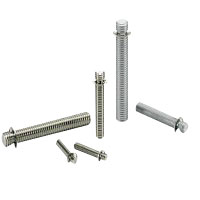
Screw adapter (Left screw type)_SAD-LC
NABEYA BI-TECH
[Features]
·It can be used as a lever/knob with a left-hand thread by combining it with a product with female threads such as a lever/knob.
·Use pinning or anaerobic adhesive to secure the screws.
Pinning is recommended when repeatedly tightening in combination with a lever/knob.
·The retaining ring accurately determines the thread length.From: ₹ 362.02 Days to Ship: 5 Day(s) or more
5 Day(s) or more
| Brand |
|---|
| Product Series |
| CAD |
| From |
| Days to Ship |
| Type |
| Thread Dia. M |
| Screw Type |
| Screw Length L |
| Thread Pitch |
| Material |
You can add up to 6 items per a category to the compare list. 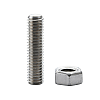     | You can add up to 6 items per a category to the compare list. 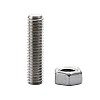     | You can add up to 6 items per a category to the compare list. 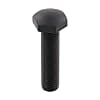      | You can add up to 6 items per a category to the compare list. 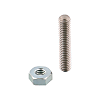    | You can add up to 6 items per a category to the compare list. 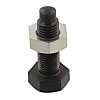     | You can add up to 6 items per a category to the compare list. 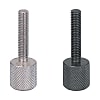 | You can add up to 6 items per a category to the compare list. 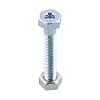      | You can add up to 6 items per a category to the compare list. 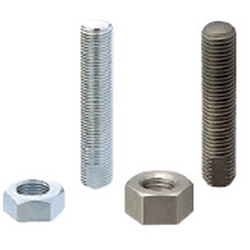 | You can add up to 6 items per a category to the compare list. 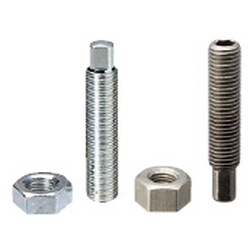 | You can add up to 6 items per a category to the compare list.  | You can add up to 6 items per a category to the compare list.  | You can add up to 6 items per a category to the compare list. 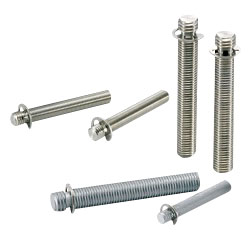 | You can add up to 6 items per a category to the compare list. 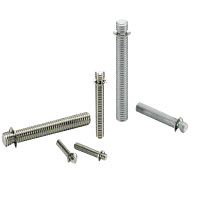 | |
| Brand | MISUMI | MISUMI | MISUMI | MISUMI | MISUMI | MISUMI | MISUMI | MISUMI | MISUMI | NABEYA BI-TECH | NABEYA BI-TECH | NABEYA BI-TECH | NABEYA BI-TECH |
| Product Series | |||||||||||||
| CAD |
|
|
|
|
|
|
|
|
|
|
|
|
|
| From | ₹ 239.00 | ₹ 120.00 | ₹ 396.42 | ₹ 182.00 | ₹ 203.57 | ₹ 289.28 | ₹ 432.80 | ₹ 168.93 | ₹ 381.15 | ₹ 362.02 | |||
| Days to Ship | Same day or more | Same day or more | Same day or more | Same day or more | Same day or more | 6 Day(s) or more | Same day or more | 6 Day(s) or more | Same day or more | 5 Day(s) or more | 5 Day(s) or more | 5 Day(s) or more | 5 Day(s) or more |
| Type | Full Threaded | Full Threaded | Hex | Full Threaded | Hex | Knurled | Hex | Full Threaded | Full Threaded | Full Threaded | Full Threaded | Full Threaded | Full Threaded |
| Thread Dia. M | 3 ~ 20 | 3 ~ 20 | 4 ~ 16 | 3 ~ 20 | 4 ~ 16 | 3 ~ 12 | 3 ~ 20 | 3 ~ 20 | 4 ~ 12 | 8 | 4 ~ 10 | 5 ~ 8 | 4 ~ 10 |
| Screw Type | Fine | Coarse | Coarse / Fine | Coarse / Fine | Coarse / Fine | Coarse / Fine | Coarse / Fine | Coarse / Fine | Coarse / Fine | Coarse | Coarse | Fine | Coarse |
| Screw Length L | 10 ~ 119 | 10 ~ 120 | 10 ~ 80 | 10 ~ 120 | 15 ~ 80 | 15 ~ 80 | 15 ~ 120 | 15 ~ 120 | 15 ~ 60 | 12 ~ 20 | 40 ~ 120 | 12 ~ 63 | 12 ~ 80 |
| Thread Pitch | 0.35 ~ 1.5 | 0.5 ~ 2.5 | 0.5 ~ 2 | 0.35 ~ 2.5 | 0.5 ~ 2 | 0.35 ~ 1.75 | 0.5 ~ 2.5 | 0.35 ~ 2.5 | 0.5 ~ 1.75 | 1.25 | 0.7 ~ 1.5 | 0.5 ~ 1 | 0.7 ~ 1.5 |
| Material | Steel / Stainless Steel | Steel / Stainless Steel | Steel / Stainless Steel | Steel / Stainless Steel | Steel / Stainless Steel | Steel / Stainless Steel | Steel / Stainless Steel | Steel / Stainless Steel | Steel / Stainless Steel | Stainless Steel | Steel / Stainless Steel | Stainless Steel | Stainless Steel |
Loading...
Configure
Specification/Dimensions
-
Type
-
Thread Dia. M
-
Screw Type
-
Screw Length L
-
Thread Pitch
-
Material


Related Categories to Adjustment Screws
Payment Method
- Credit Card
-


- Debit Cart
-


- Net Banking
-


- UPI
-


- Cheque on delivery
-

- Online payment
-


Social Media


MISUMI India Contact
Copyright © MISUMI Corporation All Rights Reserved.
How can we improve?
How can we improve?
Thank you for your time.
Your feedback is essential for our continuous improvement
Privacy Policy
Thank you for your cooperation.
Thank you for your time.
Your feedback is essential for our continuous improvement
Please use the inquiry form.
Privacy Policy